
The Complete Guide to Competence and SKEB
What skills, knowledge, experience and behaviours mean, what the law now requires of clients and contractors and how to check the people working on your building are competent.
What SKEB means
SKEB is shorthand for the four things that make a person competent: skills, knowledge, experience and behaviours. For organisations, the equivalent is organisational capability.
Competence is the combination of what someone can do, what they understand, what they have done before and how they act when it matters. The Building Safety Act 2022 and the regulations made under it use this structure, and the industry standards that followed adopt it too.
It applies to people and to the businesses they work for. An organisation must show it has the systems, resources and people to deliver the work it takes on. The regulations call this organisational capability.
For clients, SKEB is useful because it turns a vague question, "is this contractor any good?", into four things you can ask about and check.
It also works in both directions. A contractor that can describe how it develops and records SKEB in its own teams is far more likely to give you the evidence you need for your building.
Skills
The practical and technical ability to carry out a task safely and to the right standard, from operating survey equipment to installing a façade system.
Knowledge
Understanding of the legislation, standards and technical principles behind the work, including fire safety, structural safety and the Building Regulations.
Experience
A track record of applying skills and knowledge on comparable buildings, and learning from each project.
Behaviours
How people act: raising concerns, owning decisions, communicating openly and putting safety first under pressure.

Competence isn't just a checkbox for us. It's embedded in our culture.
Competence and the law
Since 1 October 2023, Part 2A of the Building Regulations 2010 has placed competence duties on everyone who commissions, designs or carries out building work in England.
The Building Safety Act 2022 followed the Grenfell Tower fire and Dame Judith Hackitt's Independent Review of Building Regulations and Fire Safety. Its competence requirements came into force through the Building Regulations etc. (Amendment) (England) Regulations 2023, which added a new Part 2A, Dutyholders and Competence, to the Building Regulations 2010.
Part 2A applies to building work that needs building regulations approval, whatever the height or use of the building. Higher-risk buildings carry an extra layer of duties, covered in the next chapter.
The dutyholders
- Client: the person or organisation the work is done for
- Designers: anyone who prepares or changes a design
- Contractors: anyone who carries out, manages or controls the work
- Principal Designer: the designer appointed to plan, manage and monitor the design work
- Principal Contractor: the contractor appointed to plan, manage and monitor the building work
What the client must do
- Make suitable arrangements for planning, managing and monitoring the project so the work meets the Building Regulations
- Allow enough time and resources for that to happen
- Appoint a Principal Designer and Principal Contractor where more than one contractor is, or is likely to be, involved
- Take all reasonable steps to satisfy themselves that anyone they appoint is competent
- Share building information with designers and contractors as soon as practicable
Designers and contractors have matching duties. They must only take on work they are competent to carry out, plan and monitor that work and cooperate with others on the project. People still in training can do the work under suitable supervision.
Many of these roles mirror those under the Construction (Design and Management) Regulations 2015, and the same organisation often fills both. The duties are still separate: CDM is about health and safety during construction, while Part 2A is about whether the finished work meets the Building Regulations.
Most of the Act's building control reforms apply in England. Wales and Scotland have their own regimes, but evidenced competence is good practice wherever you build.
The Building Safety Act raises the bar, and rightly so. Our teams are already operating at that level, with robust systems to evidence competence across every stage of a project. SKEB isn’t new to us. It’s how we’ve always worked.


JOHN JESSIMER
MANAGING DIRECTOR
STARFISH CONSTRUCTION
Building competence in practice
Competence is built over time through training, supervision and experience, and it has to be kept current as regulations and methods change.

At Starfish Construction, competence is developed through on-the-job training, an online Learning and Development Hub and management support and mentoring for every team member. Training starts at induction and continues throughout each person's career.
That structure matters because regulations, products and methods keep changing. A competent team is one that keeps learning, records what it has learned and shares it between projects.
How each part of SKEB shows up on site
Skills
Building envelope remediation, including façades, roofing and window replacement; technical surveying; project management; and installation by skilled trades, supported by management systems certified to ISO 9001, ISO 14001 and ISO 45001.
Knowledge
Understanding of non-combustible materials and systems, PAS 9980 fire risk appraisals of external walls and full-scale fire testing of façade mock-ups to BS 8414, brought in early through pre-construction services agreements.
Experience
Projects across high-rise residential, student accommodation, healthcare, education, commercial and industrial buildings, many in buildings that stay occupied throughout the work.
Behaviours
A safety-first mindset, ownership of outcomes, open communication with clients and residents and a culture where feedback is welcomed and lessons carry into the next project.
You don’t build trust by chance. You build it through proven experience, technical knowledge and doing the right thing every time. That’s what SKEB represents to us, and why Starfish Construction is trusted to deliver complex projects to the highest standard.
SKEB on real projects
Competence is easiest to judge in what a team has delivered. These projects show skills, knowledge, experience and behaviours working together.

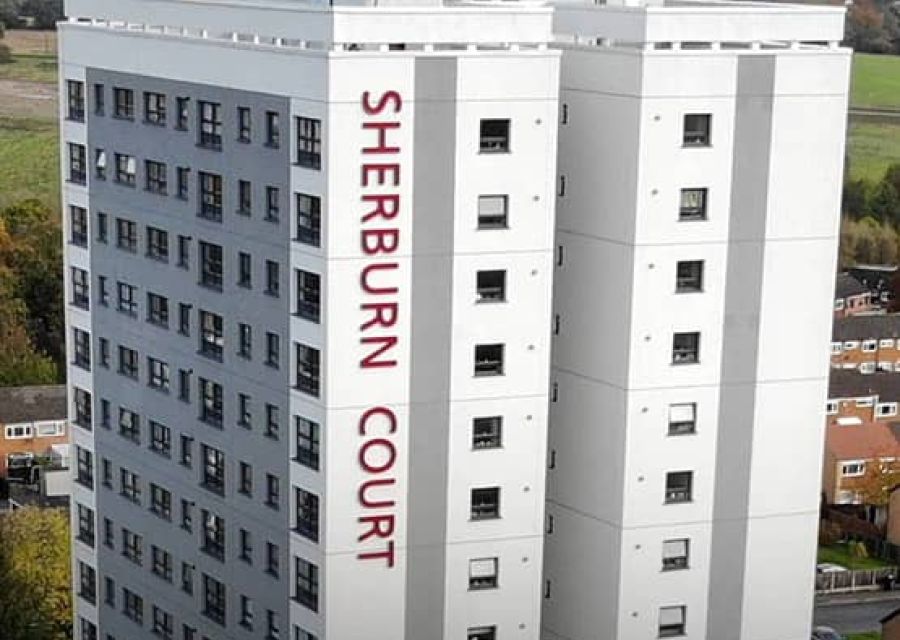
High-rise façade remediation, Leeds
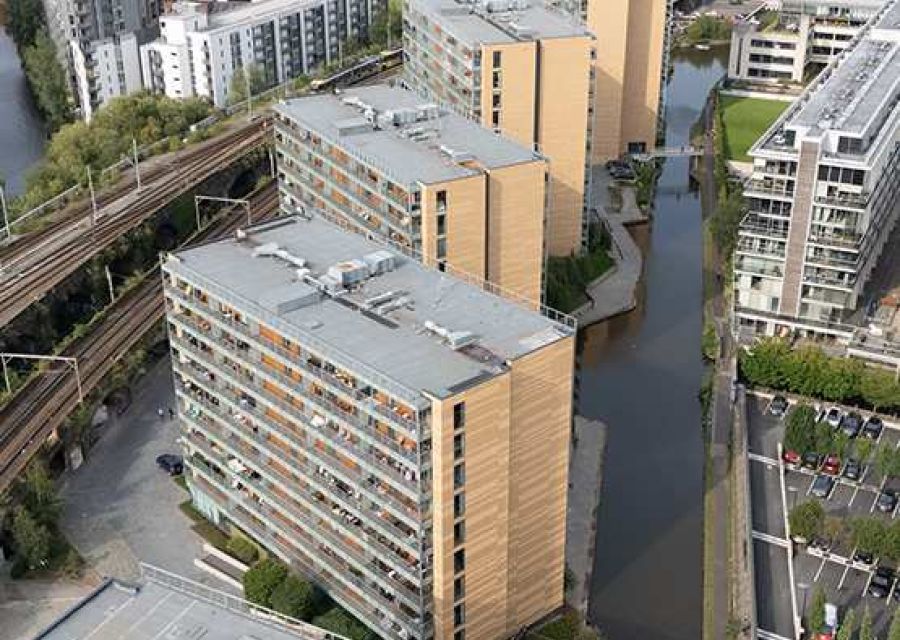
A 14-storey social housing tower with 85 apartments, home mainly to residents over 60. Combustible external wall insulation was replaced with an A1 non-combustible system while residents stayed in their homes.
- 465 windows replaced and recycled
- New flat roofing system
- Resident liaison officer on site throughout

Student accommodation façade replacement, Bournemouth
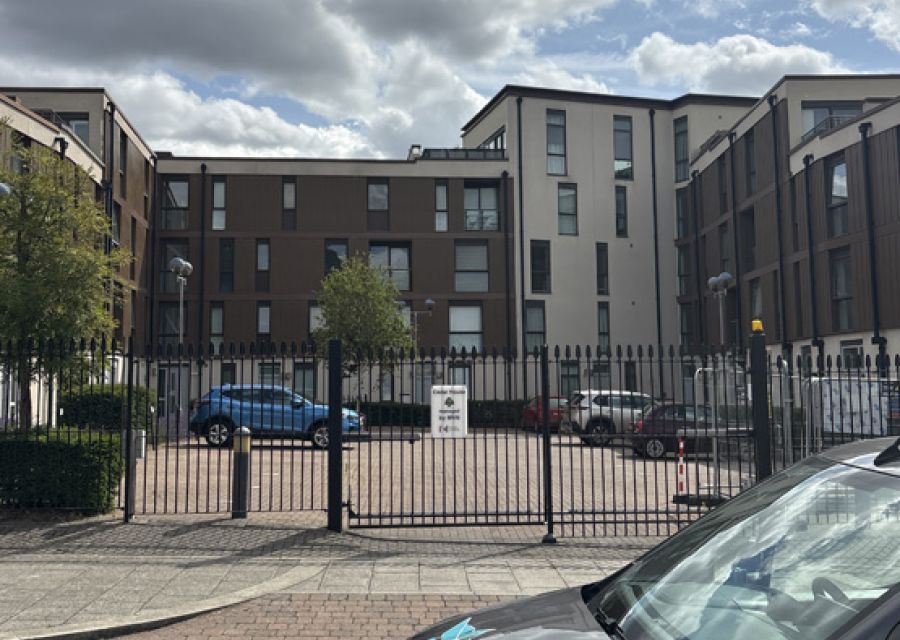
Around 6,000 m² of cladding replaced with a non-combustible system for Bournemouth University International College, from technical survey and design through to delivery as Principal Contractor.
- Full-scale BS 8414 fire testing
- 146 approved drawings and 751 panel fabrication drawings
- Supply chain maintained through the pandemic

RAAC removal and roof replacement, London school
Design and delivery as Principal Contractor, with the in-house design team and scaffolding division working as one. RAAC roof panels were removed under a protective crash deck and temporary roof.
- Crash deck protecting building users below
- Temporary roof during removal
- New acoustic structural metal deck
It was important for us to have the right contractor on site, one with the right approach to safety, that would also allow us to continue operations and service our customers. Overall, it was a seamless and safe experience.
Systems that make competence visible
Good systems turn competence into evidence: who did what, when, with which materials and under whose supervision.
One integrated team
Design, surveying, remediation, scaffolding, asbestos management and aftercare sit within one group. Working as one team reduces handover gaps between disciplines, keeps standards consistent and lets knowledge move from project to project.
Digital records with Procore
Starfish Construction uses Procore across every project to manage documents, workflows, reporting and communication. It gives clients real-time visibility of progress, assigns clear responsibility for each task and builds a central, audit-ready record that supports the golden thread.
Warranties and handover
As a product-neutral contractor, Starfish Construction works with a range of manufacturers. Manufacturer warranties on façade, roofing and remediation systems typically run for 25 to 30 years, depending on the products specified, and are handed over with the project documentation.


DANIEL JESSIMER
COMMERCIAL DIRECTOR
STARFISH CONSTRUCTION
Checking a contractor's competence
Asking the right questions before you appoint is the simplest way to meet your duties as a client and protect your building.
Questions to ask
- Who will manage the Principal Contractor or Principal Designer duties, and what is their experience on similar buildings?
- How does the organisation assess, record and refresh the skills, knowledge, experience and behaviours of its people?
- Which competence frameworks does it work to, such as PAS 8671 or PAS 8672 for higher-risk buildings?
- Can it show recent projects of a similar height, use and building envelope type, with references?
- How is the competence of subcontractors checked and supervised?
- What records will you receive at handover, and in what format, to support the golden thread?
Assumptions to avoid
- That a trade body logo or a card on its own proves competence for a specific task
- That competence duties only apply to higher-risk buildings
- That a CDM appointment automatically covers the Building Regulations roles; confirm the appointments in writing
- That competence checked at tender stays current for the life of the project
We engaged Starfish Construction, following review and due diligence of their business profile and based on previous experience towards delivering similar projects. We were confident they could meet our business requirements and the expectations of this challenging, high-profile project, driven by budget, logistics and programme restraints, and without compromising on Health & Safety, Quality, Sustainability and Environmental standards, they delivered on all counts.





Sources and further reading
- Building Safety Act 2022
- The Building Regulations etc. (Amendment) (England) Regulations 2023
- The Building Regulations 2010, including Part 2A
- Higher-Risk Buildings (Keeping and Provision of Information etc.) (England) Regulations 2024
- GOV.UK: The Industry Competence Committee (built environment)
- Building a Safer Future: Independent Review of Building Regulations and Fire Safety
About this guide
Written with Starfish Construction's projects, operations and training teams. This guide is general information, not legal advice; check your own duties with the Building Safety Regulator, your building control body or a qualified adviser. Last reviewed October 2026; next review October 2027.