The Complete Guide to Land Remediation Relief
How the 150% Corporation Tax relief for cleaning up contaminated and derelict land works, who can claim, which costs qualify and how the rules may change. Written with SEAS, Starfish Construction's environmental and asbestos division.
Five things to know about the relief
Land Remediation Relief can significantly reduce the cost of dealing with asbestos and contamination, but the conditions are specific. Here are the essentials.
- Companies can deduct 150% of qualifying costs of cleaning up contaminated or long-term derelict land and buildings.
- The land must have been contaminated or derelict when the company acquired it, and the company must not have caused the problem.
- Asbestos in buildings, hydrocarbons and industrial residues can qualify, as can arsenic, radon and Japanese knotweed.
- Loss-making companies can claim a payable credit of 16% of the qualifying loss.
- The government is consulting on changes, so check the current rules with a tax adviser before you rely on them.
In this guide
Eight chapters, from how the relief works to preparing a claim. Use the Contents button at any point to jump between them.
What Land Remediation Relief is
Land Remediation Relief gives companies a Corporation Tax deduction of 150% of qualifying costs for cleaning up contaminated or long-term derelict land and buildings.
The relief was introduced in 2001 to help bring land blighted by its industrial past back into use. It was extended in 2009 to cover long-term derelict land and a small number of natural contaminants. It is set out in Part 14 of the Corporation Tax Act 2009.
Because it is a Corporation Tax relief, it applies to qualifying land anywhere in the UK. It covers both revenue and capital spending, and it applies to buildings on the land as well as the ground itself, which is why asbestos removal from older industrial and commercial buildings is one of the most common reasons to claim.

Who can claim
Only companies within the charge to Corporation Tax can claim, and only for land they did not contaminate themselves.
The conditions
- The claimant is a company within the charge to UK Corporation Tax. Individuals and partnerships cannot claim
- The land is in the UK and is held for the purposes of a trade or a UK property business, such as letting
- The land was already contaminated or derelict when the company acquired its interest in it
- The contamination or dereliction was not caused, in whole or in part, by the company or a person connected with it
Why the acquisition test matters
The relief is designed to reward companies that take on land with a problem and fix it, not companies that clean up pollution they caused. That is why the "polluter pays" principle is built into the rules and why the timing of acquisition matters.
Property investors, developers and trading companies can all qualify, provided the land is used for their trade or property business. Developers selling the finished property usually claim an additional 50% on costs that are already deductible.
What counts as contaminated land
Land is contaminated if, because of industrial activity, it is causing or could cause relevant harm. Contamination in buildings, including asbestos, can qualify.
From April 2009, land counts as contaminated where substances present as a result of industrial activity are causing, or have a serious possibility of causing, relevant harm. Relevant harm includes death, serious injury or illness, significant pollution of controlled waters and serious damage to buildings that affects their use.
Common examples
- Asbestos in roofs, cladding, insulation and other building materials
- Hydrocarbons and fuel residues from former industrial use
- Heavy metals and other industrial residues in soil
- Ground gases from former industrial or made ground
Natural contaminants
Naturally occurring contamination does not usually qualify. There are three exceptions: arsenic, radon and Japanese knotweed. Costs of dealing with these can qualify even though they are not caused by industrial activity, subject to the other conditions.
Remediation that the company is required to carry out under a statutory notice can fall outside the relief, so check the position before relying on it.

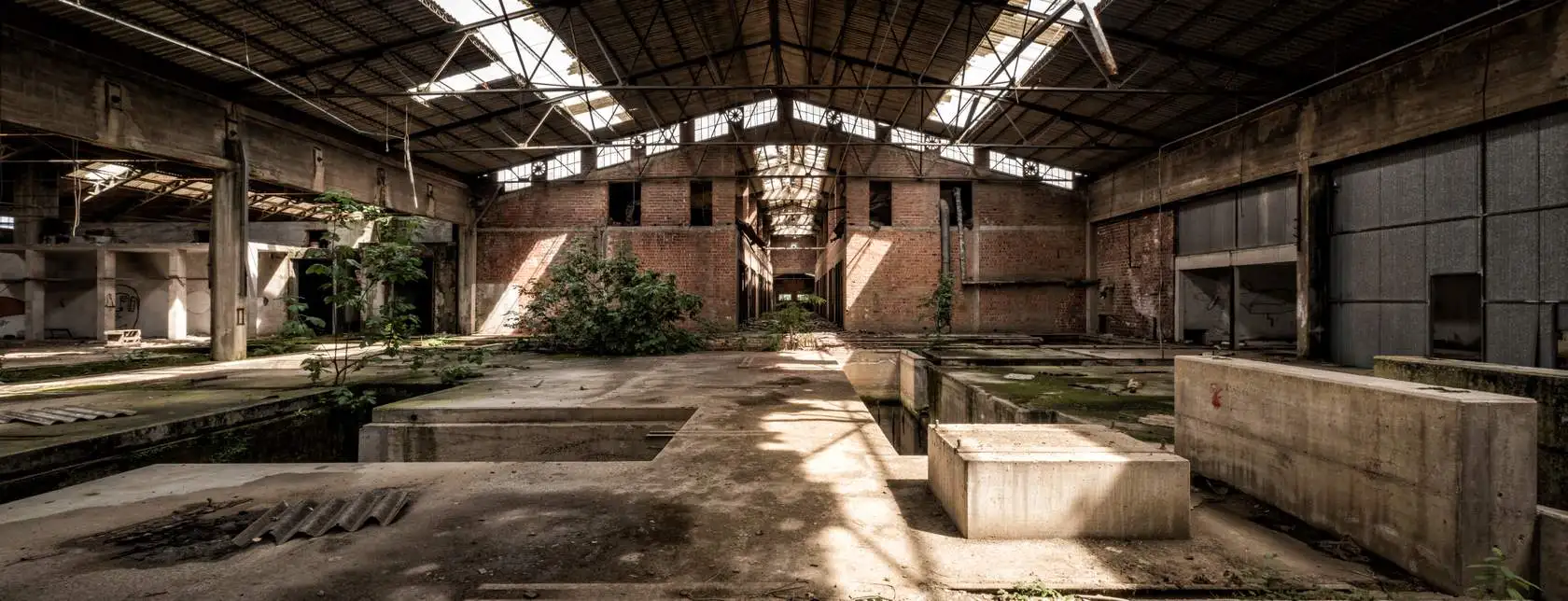
The UK Government’s Land Remediation Relief scheme is a cornerstone policy designed to incentivise the clean-up and redevelopment of contaminated or derelict land. Offering significant tax relief promotes environmental stewardship and drives economic regeneration, transforming neglected sites into vibrant, usable spaces for the community.
Qualifying and excluded costs
Qualifying costs are those spent directly on establishing, removing or containing contamination. Costs that would have been incurred anyway, or that someone else paid for, do not count.
Costs that can qualify
- Surveys and testing to establish the level of contamination, such as asbestos refurbishment and demolition surveys
- Removal of contamination, for example asbestos cement roof sheets and asbestos-containing gutters, with licensed disposal
- Containing contamination to prevent harm, such as encapsulation
- Staff costs, subcontractor costs and materials directly used in the remediation
- Associated professional fees and preliminaries, where they relate directly to the remediation
Costs that do not qualify
- Costs that would have been incurred even if the land were not contaminated
- Expenditure that is subsidised, for example through grant funding
- Landfill Tax
- Work that is planned but never carried out
- Costs where the company or a connected person caused the contamination
Replacement works, such as a new roof or overcladding after asbestos removal, need care. Some elements may qualify as part of the remediation and others may not, so the split should be agreed with your tax adviser and supported by clear contractor records.
Long-term derelict land
Land that has been derelict since 1 April 1998, or since it was acquired if that was earlier, can also qualify, but only for a specific list of costs.
Derelict land relief was introduced from April 2009. Land is derelict if it is not in productive use and cannot be brought back into productive use unless buildings or structures on it are removed.
The land must have stayed derelict since the earlier of 1 April 1998 and the date the company, or a connected person, acquired it. The relief is separate from contaminated land relief: a site does not need to be both derelict and contaminated to qualify.
The qualifying costs
- Establishing which redundant structures are present
- Removing post-tensioned concrete heavyweight construction
- Removing building foundations and machinery bases
- Removing reinforced concrete pile caps and basements
- Removing redundant below-ground services such as gas, water, electricity and telecommunications
HMRC treats this list as exhaustive. General demolition and site clearance costs outside it do not qualify as derelict land expenditure.
What the relief is worth
At the 25% main rate, the relief can be worth up to 37.5p for every £1 of qualifying spend. Loss-making companies can instead claim a payable credit.
For revenue costs, the company deducts the cost plus an additional 50%. For capital costs, it can elect to deduct 150% instead of treating the cost as capital. Where the relief creates or increases a loss, the company can surrender that loss for a payable tax credit of 16% of the qualifying land remediation loss.
Figures are illustrative. Companies paying the small profits rate, or with marginal relief, will see a smaller saving, and the payable credit is limited to the unrelieved loss.

Changes under consultation
The government is reviewing Land Remediation Relief. Nothing had been decided at the time of writing, so check the current rules before you plan a claim around them.
The government consulted on the relief and, in June 2026, published a summary of responses saying there was a compelling case for reform. A second consultation followed in July 2026 and closed on 21 September 2026.
Any changes would be expected to follow a future Budget and Finance Bill, with transitional arrangements.
What the second consultation proposed
- Aligning the definitions of contamination with those used in the planning system
- A simpler route for remediation outside the planning system
- Removing or updating the 1998 cut-off for derelict land, with a new definition
- Keeping the 150% rate for land already derelict, with a lower 100% rate for land made derelict after 2027
- Letting developers deduct qualifying costs when incurred, rather than when properties are sold
Preparing a claim
A well-supported claim starts on site: clear evidence of the contamination, clean records of the cost of dealing with it and early advice from a tax adviser.
Steps to take
- Establish the contamination with a suitable survey, such as an asbestos refurbishment and demolition survey or a ground investigation
- Check the ownership and acquisition conditions with your tax adviser before work starts
- Ask your contractor to separate qualifying remediation costs from other works in quotes, valuations and final accounts
- Keep survey reports, waste consignment notes, air test certificates and photographs
- Make the capital election within two years of the end of the accounting period in which the cost was incurred
- Claim the deduction or payable credit through your Corporation Tax return
What Starfish Construction can and cannot do
Starfish Construction does not give tax advice or make claims on clients' behalf. What we can do is deliver the survey, remediation and records a claim depends on.
- Asbestos surveys, management plans and licensed removal through SEAS, our environmental and asbestos division
- Technical surveys of roofs and building envelopes
- Replacement roofing and overcladding once remediation is complete
- Clear cost breakdowns and handover documentation to support your adviser
Asbestos remediation projects

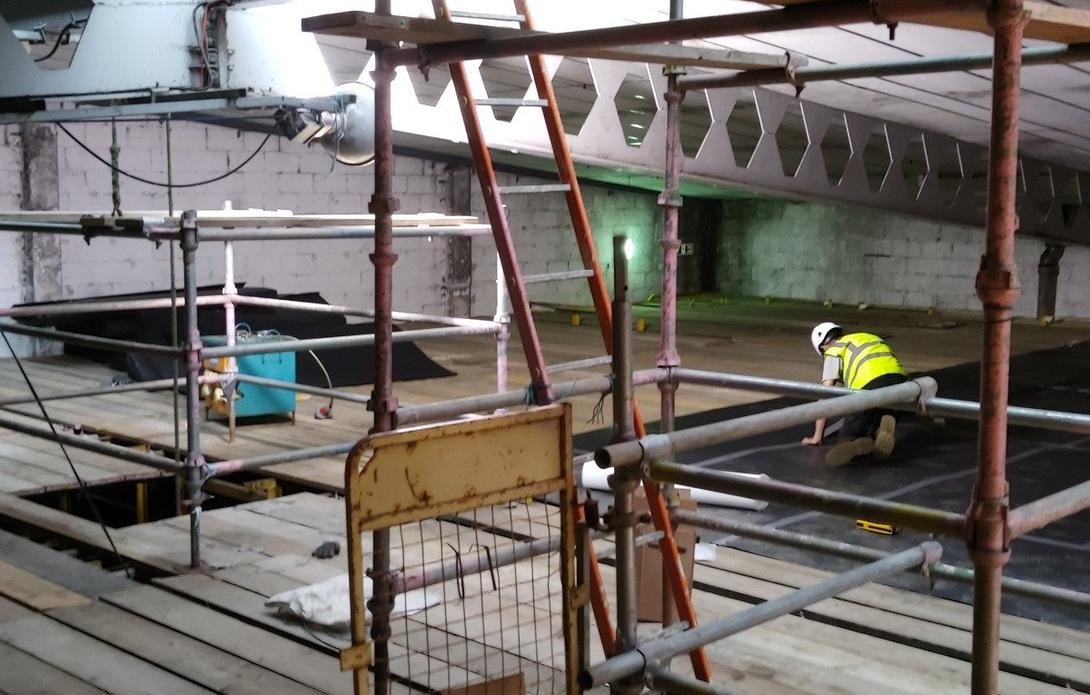
Licensed asbestos removal in a live whisky warehouse
Asbestos insulating board under the roof of a bonded warehouse was in the early stages of degradation and had been prioritised through the client's asbestos management plan.
SEAS removed the board under licence, working from a platform built over the barrel racking to protect the maturing stock below.
The asbestos insulating board was removed under licence while the stored whisky stayed protected.
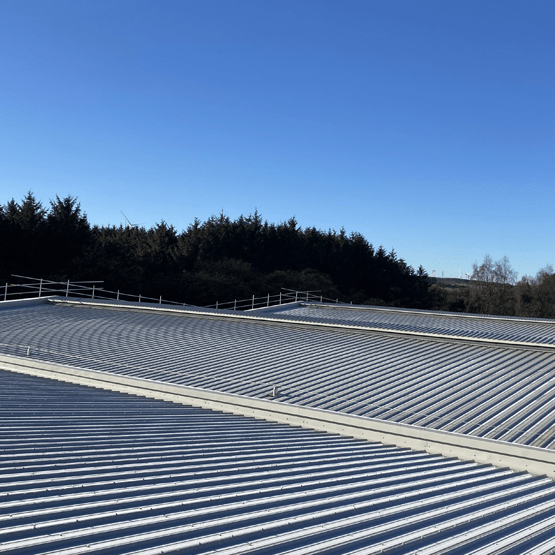
Roof replacement and asbestos removal on two bonded warehouses
Two bonded warehouses needed new roofs, with asbestos insulating board fixed beneath the existing roof liner panels.
Roofing, design, scaffolding and SEAS worked as one programme, with licensed asbestos removal built into the roof upgrade.
Both roofs were replaced and the project was completed without any accidents or incidents.
More on remediation
Sources and further reading
About this guide
Written with SEAS, Starfish Construction's environmental and asbestos division. Technical review by Jamie Purdon, Asbestos Director, SEAS. This guide is general information, not tax advice. Starfish Construction does not give tax advice or make claims on clients' behalf; speak to a qualified tax adviser about your circumstances. Rules and rates correct at October 2026; next review April 2027 or sooner if the relief changes.
Talk to SEAS about surveys, licensed asbestos removal and the remediation records your tax adviser will need.