

Exploring the Building Safety Act

The Building Safety Act (BSA) is one of the most significant reforms in UK construction, introduced to improve building safety, clarify accountability, and protect lives. It places greater responsibility on building owners, duty holders, and construction professionals to ensure compliance and transparency at every stage.

We fully embrace the principles of the BSA. Our extensive knowledge and experience across the built environment ensure that we manage all BSA regulations throughout façade remediation, roofing, and building envelope services with robust safety standards, informed design, and cost certainty. We collaborate with project stakeholders to navigate the Act and achieve the highest levels of compliance. Aligned with the Building Safety Regulator, we support the development of safety cases and ensure that key design, procurement, and buildability considerations are managed safely and sustainably from the outset.

We help you navigate the Building Safety Act and deliver projects that meet and exceed regulatory expectations.

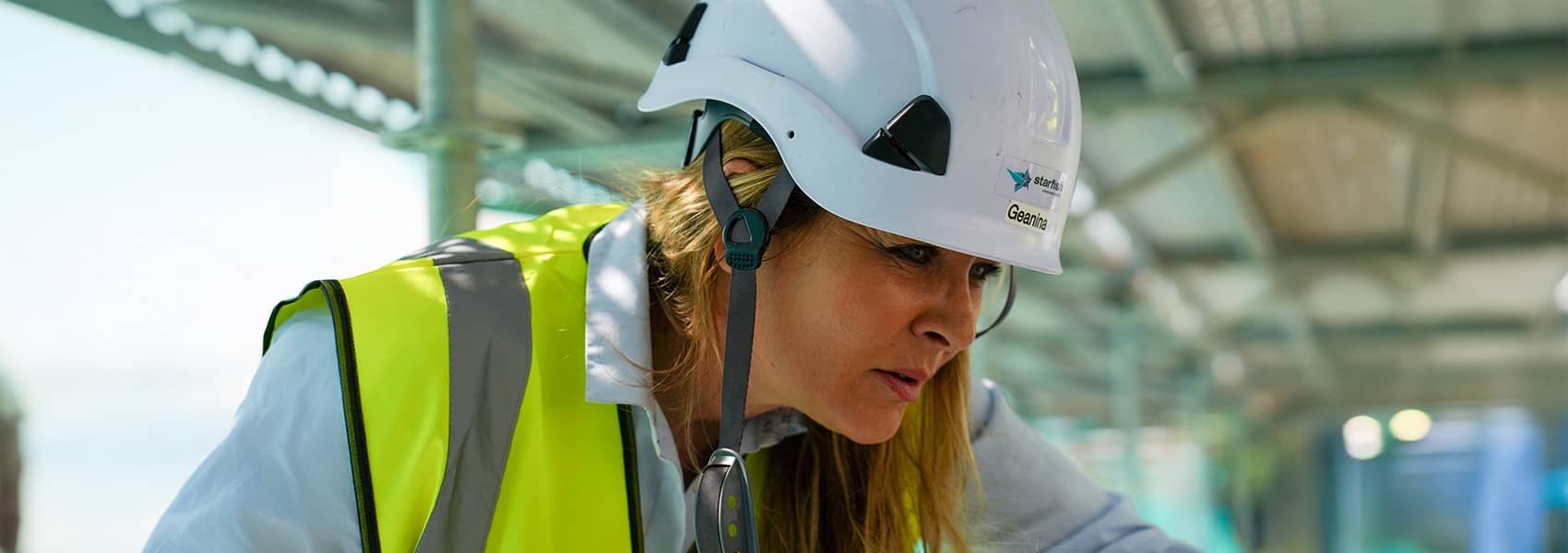
Starfish Construction engineer
KEY PILLARS OF THE BUILDING SAFETY ACT

Understanding the Core Responsibilities of the Building Safety Act

The Building Safety Act 2022 sets out clear responsibilities for all stakeholders involved in the design, construction, and management of buildings.

It establishes a new culture of accountability, where clients, duty holders, principal designers, and contractors must demonstrate competence, compliance, and a commitment to building safety at every stage.

At Starfish Construction, we integrate safety and building standards principles across our divisions and on every project, ensuring that safety, transparency, and regulatory requirements are embedded from concept through completion.

5 Priorities for Building Safety Act Compliance

Checking Your Obligations

Checking the Scope

Understanding the Gateways

Managing Information

Ensuring Duty Holder Compliance

The Building Safety Act introduces a legal duty to demonstrate competence, verify roles, and ensure compliance with Building Regulations. Our factsheet provides a simple breakdown of the 5 priorities to help you navigate BSA compliance and ensure that every decision supports safer buildings and communities.

Our Commitment to Building Safety Excellence

We do more than comply with the Building Safety Act, we champion it. Our teams are extensively trained, accredited, and aligned with the Act’s principles, ensuring that every project we deliver is safe, sustainable, compliant, and future-ready.

Through our integrated Principal Designer and Principal Contractor expertise, we proactively support clients, duty holders, and project supply chain partners in managing risk, developing comprehensive commercial structures, and overseeing Gateway submissions. Our Skills, Knowledge, Experience, and Behaviours (SKEB) framework is embedded across all operations, ensuring we deliver even the most complex building envelope projects with technical competence and transparency.

Nathan Jessimer bio image
quote decoration
“The Building Safety Act marks a positive shift towards greater accountability and safer communities. We’ve built a culture where safety, quality, and collaboration are non-negotiable. Our teams bring the expertise, processes, and mindset required to lead projects confidently.”

NATHAN JESSIMER
HSQE MANAGER

We ensure clarity from the outset, delivering specialist insight across façade remediation, roofing, and complete building envelope solutions. Our knowledge spans across PCSA, and as a Principal Designer and Principal Contractor, we are well-equipped to advise on a project’s unique requirements, including design, compliance, material selection, and sequencing, to ensure efficient, safe, and fully aligned delivery with Building Safety Act responsibilities.

Our internal processes and Evidence-Based PCSA reports ensure that a technical evaluation, site-specific investigation, and legislative alignment back every recommendation we make. Our PCSA reports provide clients and principal duty holders with the necessary documentation to confidently progress through Gateway reviews and establish a clear course for project execution.

Building Safety Act & Regulator: What You Need to Know

The Building Safety Act 2022 and its regulatory framework represent one of the most significant changes to building safety in decades, especially for high-rise and higher-risk buildings. For clients, duty holders, architects, surveyors and property managers, understanding how this law interfaces with remediation, the building envelope, and façade work is essential.

Below you'll find answers to the most pressing questions around compliance, the Building Safety Regulator, gateway approvals, duty holder responsibilities, and how Starfish Construction supports clients in aligning with the Act.

What is the Building Safety Act, and how does it affect façade and building envelope remediation?

The Building Safety Act (BSA) 2022 introduced a stronger and more accountable regulatory regime for higher-risk buildings, placing clear responsibilities on duty holders, mandating gateway approvals, and establishing the Building Safety Regulator (BSR) as a new oversight authority.

For façade and envelope remediation, the Act means that design and construction decisions must align with enhanced safety, fire, structural, and material compliance requirements. Any remediation work on a building that qualifies as "higher-risk" (for example, residential buildings over 18m or more than seven storeys) must undergo gateway approvals and be subject to BSR oversight.

Practically, this means that during remediation, you must provide robust technical justification, safety-case data, compliant material specifications, and post-work performance evidence. These stringent requirements make early-stage engagement, through PCSA, façade design reviews, compliance checks, and risk assessments, vital to success. As a trusted Principal Designer and Principal Contractor, Starfish Construction helps clients navigate the BSA framework, ensuring that all steps, from material selection to installation verification, meet the expectations of the Building Safety Regulator.

What is the role of the Building Safety Regulator, and how does it interact with façade remediation projects?

The Building Safety Regulator (BSR) is a division of the Health and Safety Executive (HSE) with a mandate under the Building Safety Act to oversee safety and performance in higher-risk buildings. BSR is the building control authority for higher-risk buildings, meaning that all approvals, inspections, conditional sign-offs, and final certifications must meet their compliance requirements.

BSR and the BSA set standards for competence, regulate building control bodies and inspectors, and enforce compliance via audits, enforcement powers, and sanctions if duty holders fail to meet their obligations.

In façade remediation projects, BSR requires that the remediation plan and implementation proposals satisfy structural safety, fire safety, and regulatory compliance requirements, with supporting evidence and documentation submitted at defined gateways. The regulator can review, request modifications, or halt project progression if safety standards are not satisfactory.

Starfish Construction's extensive experience in façade engineering and safety compliance enables us to support clients in preparing submissions, responding to BSR queries, and delivering remediation work that meets regulatory scrutiny.

What are Gateways 1, 2, and 3 under the Building Safety Act—especially in relation to façade works?

Gateways are mandatory regulatory checkpoints introduced by the BSA to ensure safety and compliance at key phases of high-risk building projects.

  • Gateway 1 (Planning Stage): This checkpoint ensures that high-level proposals consider fire and structural safety from the outset. Local planning authorities must verify the incorporation of essential safety features before granting planning consent.
  • Gateway 2 (Pre‑Construction Stage): Before major works commence, duty holders must provide a detailed safety case, complete design documentation, risk analyses, and compliance evidence to BSR for approval, a critical stage for organisations carrying out façade remediation or envelope upgrades.
  • Gateway 3 (Completion / Occupation Stage): After construction is complete, BSR must approve that the work as built aligns with approved design, safety intentions, and regulatory requirements before final occupation.

For façade remediation, this means that key elements, such as fire-resisting cladding, structural supports, penetrations, insulation systems, and interface details, must be fully justified and compliant before approval of each gateway. We can support you with robust PCSA, thorough design validation, and safety-case preparation, which are critical to meeting gateway criteria without delay.

Who is the "Accountable Person" and what are their obligations under the Building Safety Act?

The term Accountable Person (or Principal Accountable Person) refers to the duty holder(s) legally responsible for the safety of higher-risk residential buildings under the Building Safety Act.

Their core obligations include registering the building with BSR, maintaining and submitting key structural and fire-safety data (often referred to as the "Golden Thread" of information), managing safety risks throughout the building's lifecycle, and ensuring ongoing compliance with safety-case requirements.
Suppose façade or envelope defects are discovered, such as unsafe cladding or fire-risk materials. In that case, the Accountable Person must take prompt action to remediate, maintain safety, and ensure that all works follow BSA and BSR requirements. They may also be subject to enforcement actions or remediation orders if they neglect their duties.

We support Accountable Persons by delivering façade remediation planning, compliance strategies, regulatory submissions, and technical delivery, ensuring that you approach obligations confidently and defensibly.

What protections do leaseholders and building owners have under the Building Safety Act when façade (cladding) remediation is required?

The Building Safety Act introduced significant financial protections for qualifying leaseholders facing remediation costs, particularly for unsafe cladding systems. Under these protections, qualifying leaseholders will not be charged (in England) for the removal or replacement of unsafe cladding systems. The responsibility for costs rests with developers, building owners, or other designated parties.

Additionally, for buildings that exceed specified height thresholds, remediation orders can be applied via the First-tier Tribunal to compel building owners or landlords to execute safety defect repairs.

For building owners, the Act means that façade remediation must align with safety and regulatory requirements, and they may be liable for funding the work (unless protected by leaseholder rules). Starfish Construction helps both owners and leaseholders by providing remediation planning, technical justification, compliance documentation, and regulatory liaison, thereby delivering safe façades while minimising risk, cost challenges, and compliance exposure.