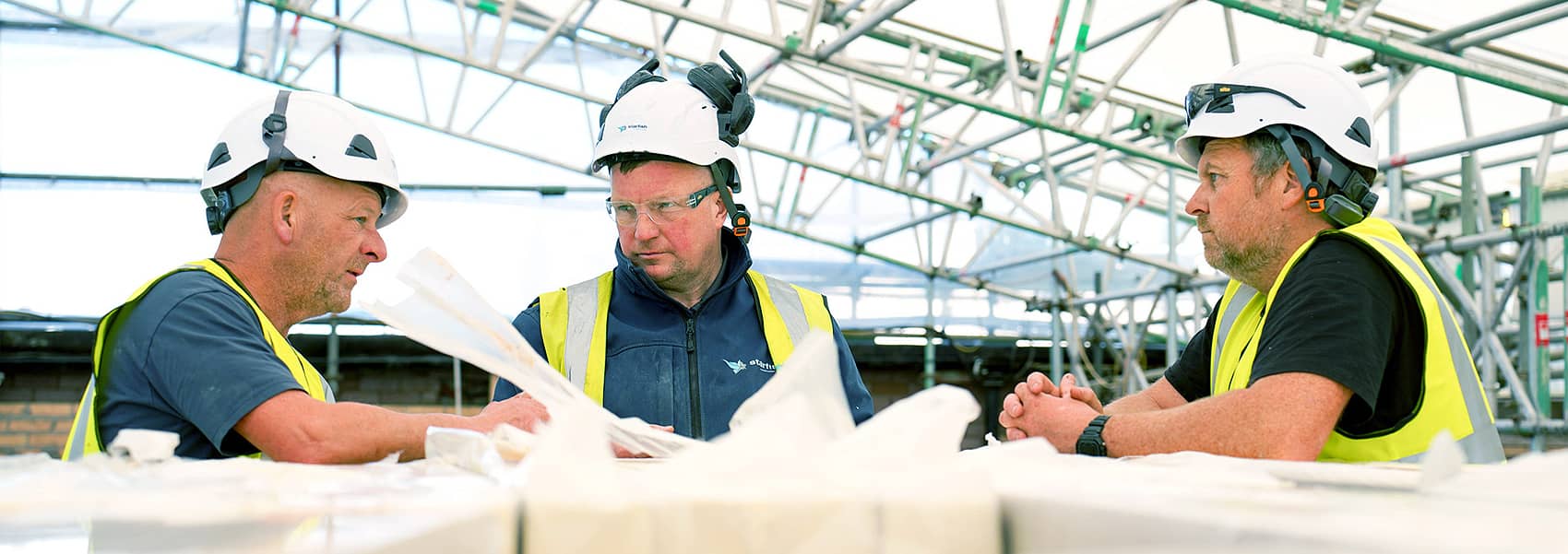
Starfish Construction site team reviewing drawings under a temporary roof
Pictured
Site and project teams reviewing plans before work starts
HSQE management
Home › Resources › In Focus › HSQE Guide

The Complete Guide to HSQE in Construction

for Clients and Duty Holders

How health, safety, quality and environmental management protect people, programmes, budgets and reputations, what the law expects of clients and contractors and the questions to ask before you appoint one. Written by our SHEQ team.

Reviewed by
Nathan Jessimer CMIOSH, SHEQ Director
Last reviewed
October 2026
Reading time
15 minutes
At a glance

Five things every client should know about HSQE

A contractor's approach to health, safety, quality and the environment shapes every project. These points summarise the guide; each one is expanded below.

  • Construction remains one of Great Britain's highest-risk industries: its fatal injury rate is around five times the all-industry average.
  • Clients have legal duties too. Under CDM 2015, you must make suitable arrangements for managing a project and check that the people you appoint are competent.
  • The cheapest place to remove a risk is at the design stage, long before anyone works at height or opens up a structure.
  • Health risks such as dust, noise and vibration cause far more harm than accidents, but they are harder to see.
  • Certificates are a start, not proof. Ask for evidence of how a contractor's system works on site.
01

What HSQE means for clients

In short

HSQE stands for health, safety, quality and environment. Managed together, they protect the people on and around a site, deliver work that lasts and limit the impact on the environment. For clients, they are also the best predictor of whether a project will run to programme and budget.

Health, safety, quality and environmental performance are often treated as separate boxes to tick. In practice they depend on each other. Safer sites produce better work, good quality reduces rework and waste and careful environmental management protects people and neighbours as well as the planet.

For property owners, managing agents and duty holders, a contractor's HSQE culture is a direct measure of risk. It affects how incidents are prevented, how problems are reported, how defects are avoided and how well the information you need at handover is kept.

Why it matters

4.8x
Construction's fatal injury rate compared with the all-industry average (HSE, 2024/25)
79,000
Construction workers suffering work-related ill health each year (HSE, 2022/23 to 2024/25 average)
50,000
Construction workers with non-fatal injuries each year (same period)

Source: HSE, Construction statistics in Great Britain, 2025.

The four pillars

  • Health: protecting workers and the public from dust, noise, vibration, hazardous substances and stress
  • Safety: preventing accidents, from falls from height to collapses and plant incidents
  • Quality: work that meets the specification first time and performs over its life
  • Environment: controlling waste, pollution, noise and the carbon of materials and site activity

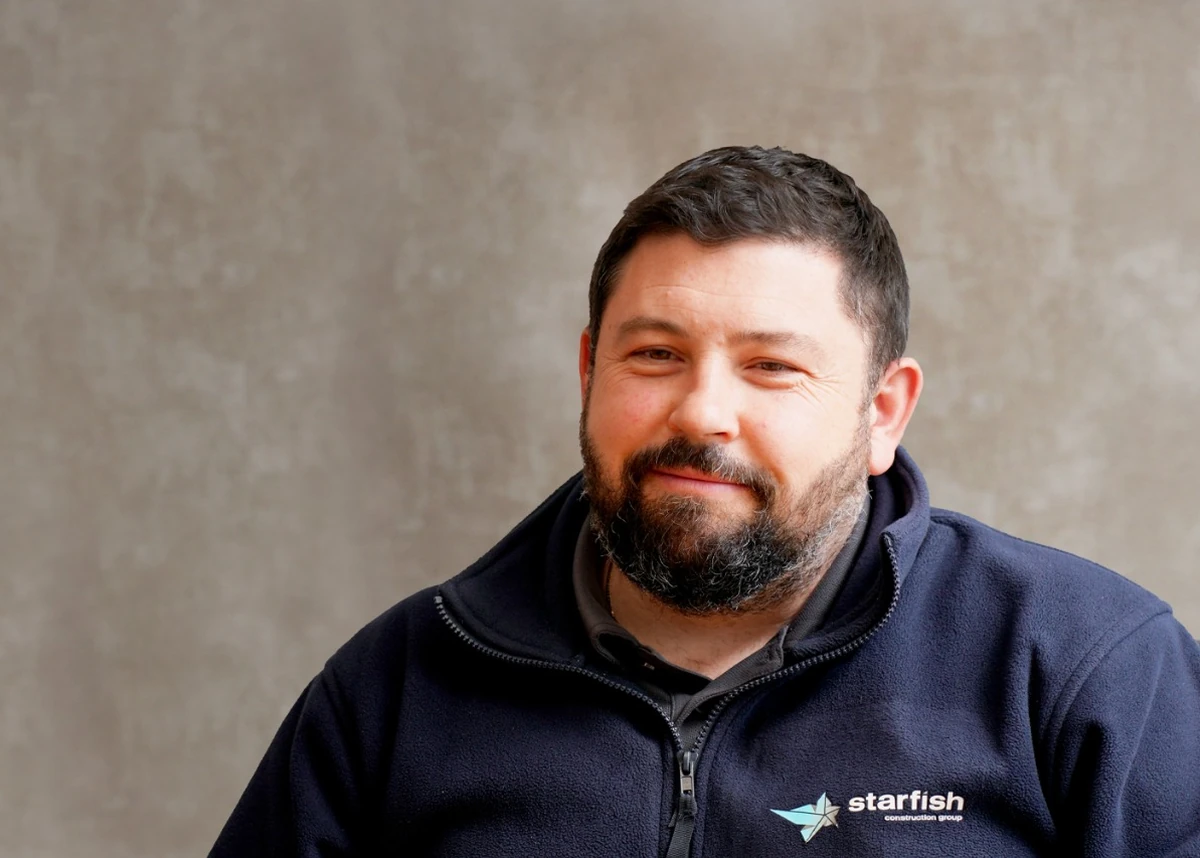
Starfish Construction team in a project review meeting
HSQE is reviewed with the project team from the first meeting.
03

Designing out risk

In short

The safest and most efficient projects remove hazards before anyone reaches site. CDM 2015 requires designers to eliminate, reduce or control foreseeable risks, and bringing health and safety specialists into design reviews makes that practical.

Design decisions fix much of the risk on a project: how materials are lifted and fixed, how often people must work at height, how much dust and noise is created and how the building will be maintained. Changing a drawing costs far less than changing a method on site.

On remediation and refurbishment projects the challenge is greater, because buildings are often occupied, records may be incomplete and hidden hazards such as asbestos, RAAC or weak structures may be present.
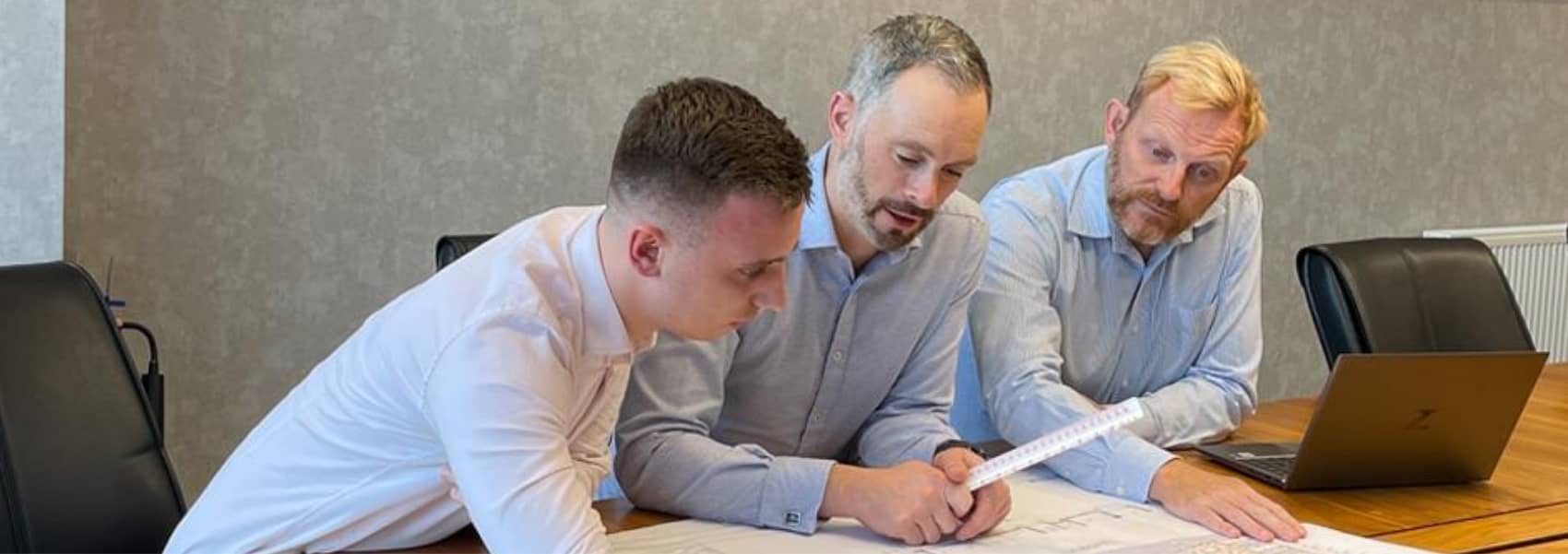
Starfish Construction design and project team reviewing drawings
Collaborative design reviews bring project, technical and SHEQ teams together.

How risk is designed out in practice
Design and technical action
How health and safety input helps
Early site assessments: structural surveys, asbestos and RAAC investigation and service mapping
Hazards such as asbestos, fragile materials and work at height are identified before the design is fixed
Buildability reviews: checking systems can be installed, accessed and maintained safely
Installation risks such as lifting, manual handling and hot works are assessed and reduced
Digital design and phasing: CAD, 3D models and sequence planning
Overlapping activities, site movements and interfaces with other contractors are planned out
Safer specifications: avoiding fragile roofs, reducing hot works and choosing appropriate fire performance
Higher-risk installation methods are removed, often with sustainability benefits too
Access strategy: scaffold, crash decks and exclusion zones shown on drawings
Safe access is planned rather than improvised, in line with the Work at Height Regulations

Read our guide to building surveys

Shaun McCluskey, Operations Director, Starfish Construction
“In complex remediation work, the real value isn't just in what we build, it's in what we prevent. By integrating HSQE at the design stage, we remove risks before they reach the site, reduce disruption for clients, and deliver safer, smarter outcomes. That's how we build with foresight, not just hindsight.”

SHAUN MCCLUSKEY
OPERATIONS DIRECTOR
STARFISH CONSTRUCTION

04

Quality, right first time

In short

Quality is about doing the work right the first time. An integrated management system certified to the ISO standards for quality, environment and occupational health and safety gives clients a consistent, auditable way of working on every project.

Defects and rework cost time and money and, on occupied buildings, cause repeated disruption. A structured quality process catches problems at the point where they are cheapest to fix: in the design, at material delivery and at each inspection stage.

The three ISO standards

  • ISO 9001: quality management
  • ISO 14001: environmental management
  • ISO 45001: occupational health and safety management

Starfish Construction operates an integrated management system certified to all three standards.

Our accreditations

A controlled process, from enquiry to handover
01
Enquiry and pre-qualification
Client needs and early HSQE risks are identified.
02
Project set-up
A structured handover of drawings, documents and risk registers.
03
Design and technical review
Risk reduction and quality are built into the specification.
04
Review and validation
Plans, risk assessments and method statements are checked against requirements.
05
Delivery and inspection
Materials and work are inspected and recorded as the project progresses.
06
Internal audit
Regular audits confirm quality, safety and environmental controls are working.
07
Handover
The finished work is verified and handed over with documented assurance.
08
Feedback and improvement
Snags, concerns and lessons are logged and used to improve future work.
05

Occupational health and wellbeing

In short

Work-related ill health affects far more construction workers than injuries do, but the harm often appears years later. Dust, noise, vibration and stress need the same level of planning and monitoring as the hazards you can see.

Silica and wood dust, asbestos, noise, hand-arm vibration from power tools, manual handling and long hours all carry long-term health risks. Clients and principal contractors have a shared interest in controlling them: ill health leads to lost time, enforcement action and, above all, harm to people.

Health surveillance

Regular checks such as hearing and lung function tests and hand-arm vibration screening, so early signs are found and acted on.

Dust and hazardous substances

COSHH assessments, on-tool extraction, water suppression, suitable respiratory protection and face-fit testing.

Noise and vibration

Choosing lower-vibration tools, rotating tasks, monitoring exposure times and providing hearing protection.

Fit for work

Pre-start checks and phased return-to-work plans after illness or injury, plus drug and alcohol testing.

Mental health and wellbeing

Trained mental health first aiders, open conversations, support lines and awareness campaigns.

Reporting and learning

RIDDOR-reportable illnesses such as hand-arm vibration syndrome and occupational dermatitis are reported and investigated and wider trends are tracked.

“Leading with HSQE isn't a requirement, it's a responsibility. For us, for you, for every structure we deliver.”
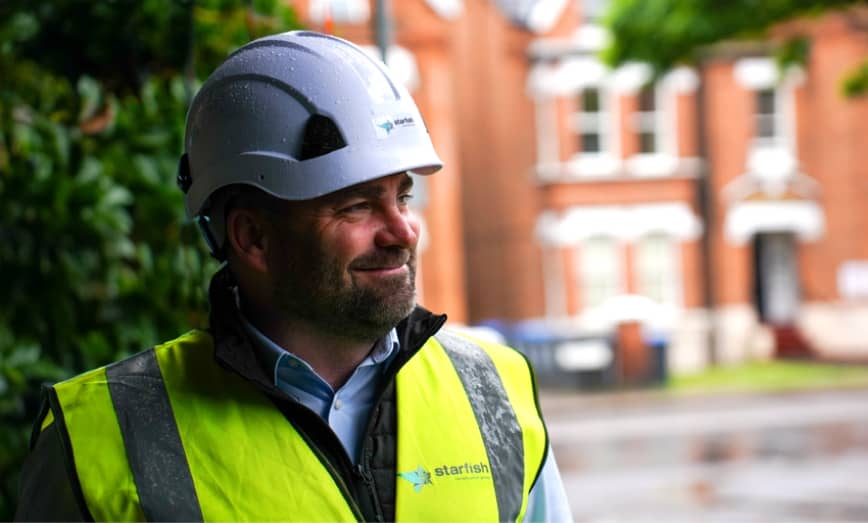

Nathan Jessimer
SHEQ Director, Starfish Construction
The safest risk is the one
that never reaches site.
06

Environmental management on site

In short

Construction sites affect their surroundings through waste, dust, noise, water run-off and carbon. Good environmental management controls these impacts, supports clients' sustainability goals and reduces cost.

Environmental management starts with the design and the choice of materials and carries through to how a site is set up, run and cleared. For occupied buildings and sensitive neighbours, controlling dust, noise and deliveries is also part of being a considerate neighbour.

What good environmental management covers

  • Following the waste hierarchy: reduce, reuse and recycle before disposal
  • Segregating waste on site and using licensed carriers and facilities
  • Preventing pollution of drains and watercourses
  • Controlling dust, noise and vibration for neighbours and occupants
  • Choosing durable, responsibly sourced materials
  • Measuring fuel, energy and the carbon of materials

Asbestos and contaminated materials

Many older buildings contain asbestos. Before refurbishment or demolition, a refurbishment and demolition survey is normally required, and licensable work must be carried out by an HSE-licensed contractor.

SEAS, Starfish Construction's environmental and asbestos management division, holds an HSE licence for asbestos removal.

SEAS environmental and asbestos management

Nathan Jessimer, SHEQ Director, Starfish Construction
“HSQE isn't a department; it's our culture. From project managers to site teams, everyone shares responsibility for protecting people, the environment, and client reputation.”

NATHAN JESSIMER
CMIOSH
SHEQ DIRECTOR

07

Culture, competence and training

In short

Systems only work if people follow them. A strong HSQE culture is led from the top, built through training and competence checks and kept honest by open reporting of near misses and problems.

The best contractors make safety and quality part of everyday conversation: toolbox talks, daily briefings, visible leadership on site and a culture where anyone can stop work if something looks wrong. Near misses are reported and investigated, not hidden.

Competence you can check

  • Construction Skills Certification Scheme (CSCS) cards for site workers
  • SMSTS or SSSTS training for site managers and supervisors
  • IOSH and NEBOSH qualifications in the health and safety team
  • A training matrix showing mandatory and role-specific training
  • Regular toolbox talks, with records
  • Root cause analysis after incidents and near misses

At Starfish Construction, this is reinforced through Elevate, our company-wide culture programme, and a dedicated learning and development hub that tracks training for every role.
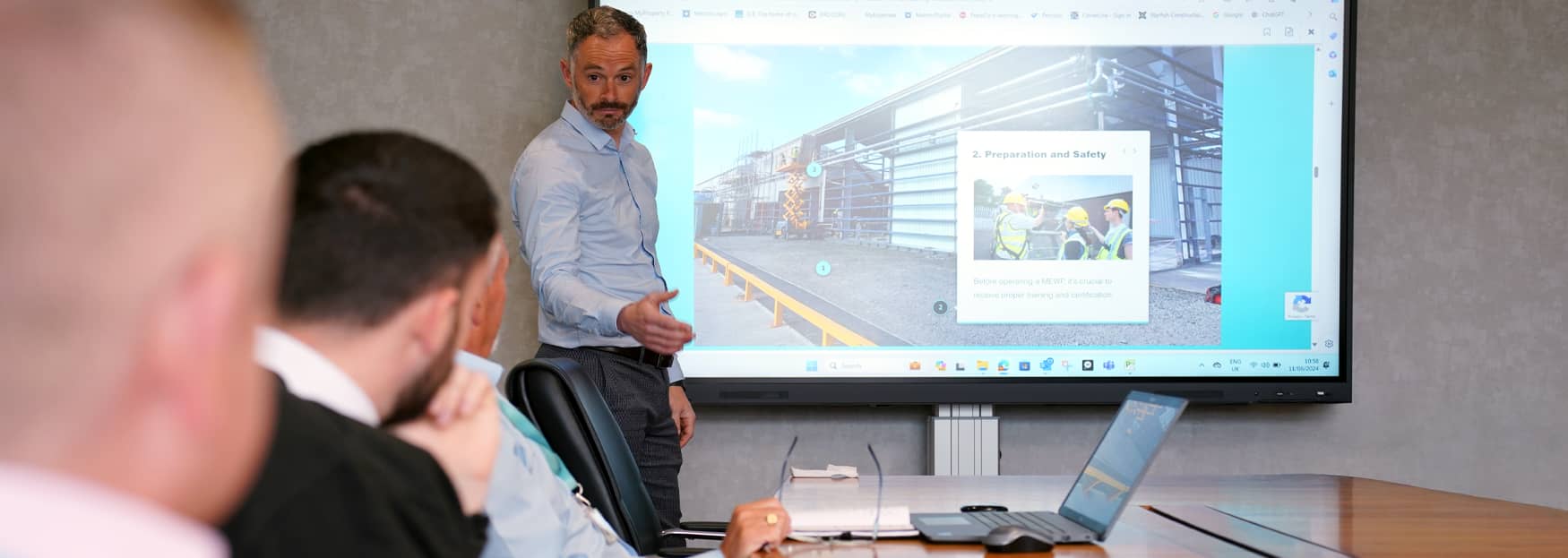
SHEQ training session for the Starfish Construction team
Toolbox talks and training keep standards consistent across every site.

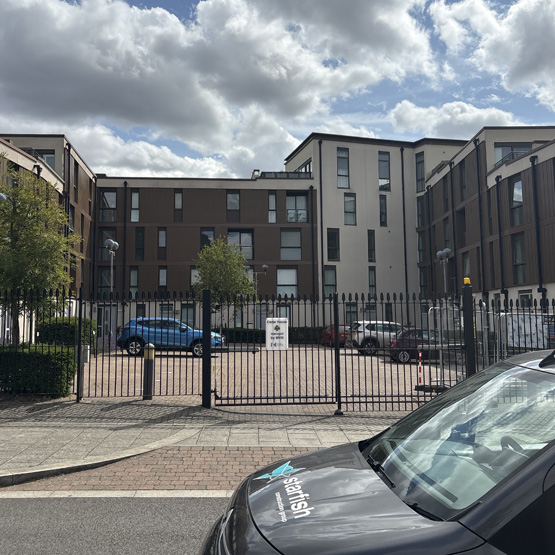
Digital records

Digital project management platforms give clients live access to inspections, risk assessments, method statements, incidents and progress, and create an audit trail that supports the golden thread on higher-risk buildings.
08

Choosing a contractor: the client's HSQE checklist

In short

When you appoint a contractor, you are also choosing their culture, systems and standards. Good contractors welcome detailed questions about HSQE, and the answers tell you far more than a price.

Use these questions when you appoint a contractor for remediation, roofing, refurbishment or building envelope work. Alongside each one is a common assumption worth avoiding.

01
Can you show your current ISO 9001, 14001 and 45001 certificates and recent audit results?
Assumption to avoid: “They've done this before, so they must know what they're doing.”
02
How do you report near misses and site issues to clients?
Assumption to avoid: “No news is good news. If there was a problem, they'd tell me.”
03
How do you train your teams and check competence on site?
Assumption to avoid: “They've got PPE and signs up, so they take safety seriously.”
04
How do you investigate and learn from incidents?
Assumption to avoid: “They said they've never had an accident; that's good enough.”
05
How often are risk assessments and method statements reviewed, and how are teams briefed on them?
Assumption to avoid: “They gave me a RAMS document, so we must be covered.”
06
How do you manage health risks such as dust, noise and vibration?
Assumption to avoid: “Health is the operatives' own business.”
07
How will quality be inspected, recorded and handed over, including hold points, sign-offs and defects?
Assumption to avoid: “They hold ISO 9001, so every detail will be checked.”
08
How will waste, dust, noise and environmental incidents be controlled and reported on this site?
Assumption to avoid: “Environmental controls only matter on large or greenfield sites.”

Expect evidence, not assurances

A contractor's HSQE approach is your first line of defence against cost, delay and reputational damage. Ask for records, audit results and examples, and expect clear answers.

Projects delivered safely in live environments

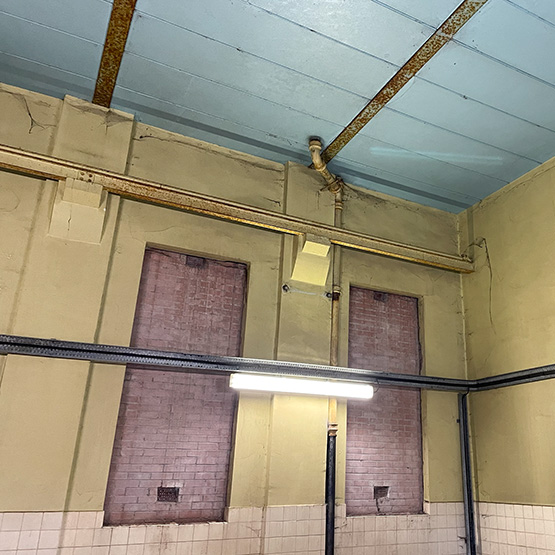
Coordinated façade remediation, Cedar House

Coordinated façade remediation, Cedar House

The challenge

Occupied homes, private balconies and public routes sat right next to the scaffold and façade removal works.

What we did

Controlled work zones, pedestrian barriers, signage, CCTV, liaison arrangements and managed deliveries kept residents and the public apart from the works.

Outcome

The five-month programme finished with no recorded accidents, incidents, RIDDOR events, improvement notices or non-conformances.
View the project profile
RAAC strengthening for Scottish Water

RAAC strengthening for Scottish Water

The challenge

RAAC was found in the roof of an occupied, business-critical building where essential services had to continue.

What we did

Temporary works design and a controlled access strategy beneath RAAC-affected zones, within a safe system of work agreed with the client.

Outcome

All works were completed on programme, within the client's operational constraints and with zero incidents.

View the project profile
Fire remediation in a fully occupied building, Wimbledon

Fire remediation in a fully occupied building, Wimbledon

The challenge

The building stayed fully occupied, deliveries had to be managed in a high-traffic area and a nearby primary school needed protecting.

What we did

Additional safeguarding measures were put in place around deliveries and site movements, alongside close contact with residents.

Outcome

The works were delivered safely, on budget and with no health and safety incidents.

View the project profile

About this guide

Reviewed by Starfish Construction's SHEQ team. This guide is general information, not legal advice; check your own duties with the HSE or a qualified adviser. Last reviewed October 2026; next review October 2027.
Planning a project
that has to run safely?
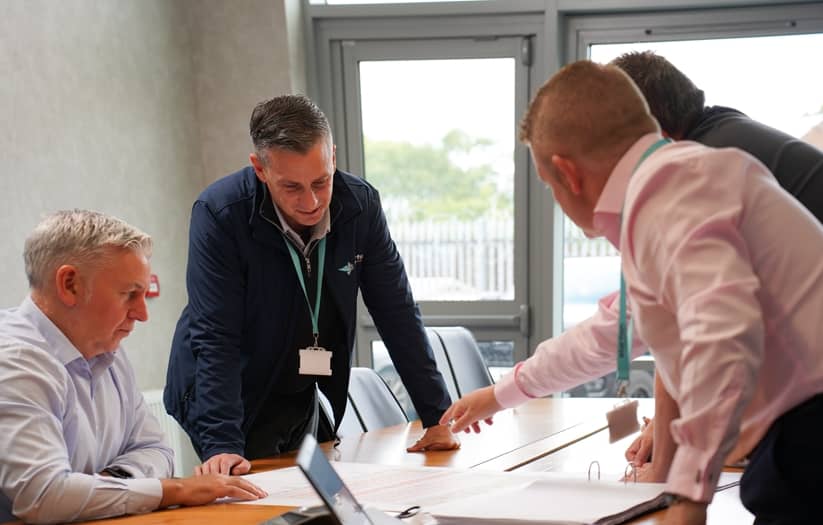
Starfish Construction project team planning a project

Talk to our team about safe, well-managed delivery for your building, from early surveys and design to handover.