
RAAC Remediation: Risks, Assessment and Management
RAAC remediation and understanding the issues surrounding its use and weaknesses are now a prerequisite for duty holders under the Building Safety Act, as the identification and remediation of Reinforced Autoclaved Aerated Concrete (RAAC) are essential for managing structural safety. We support building owners and managers in understanding risk and compliance, while protecting building performance and occupant safety through specialist RAAC removal, surveys and strengthening across UK commercial and education properties. Starfish Construction delivers a full suite of options and reinforced autoclaved aerated concrete solutions to remediate, maintain, and manage risks, UK-wide for commercial, public-sector, and educational buildings.

What is RAAC (Reinforced Autoclaved Aerated Concrete)
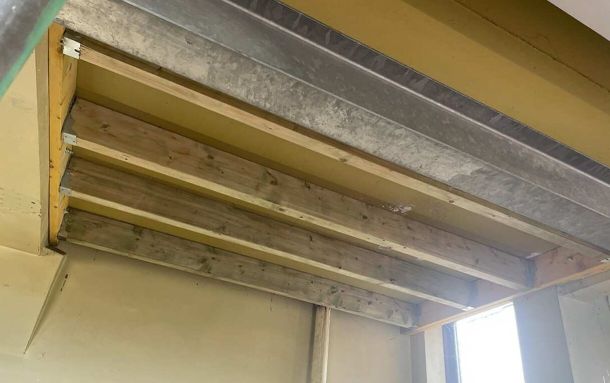
RAAC is a lightweight form of concrete used in roof, floor, wall and panel construction in buildings built predominantly between the mid-1950s and late 1980s. While structurally effective at the time, modern inspection and research indicate deterioration and a risk of sudden failure, particularly when exposed to moisture or subjected to inadequate maintenance.
Managing the presence of RAAC, particularly in an educational setting, is now a key priority for duty holders and building owners across the UK. We deliver reinforced autoclaved aerated concrete solutions that identify, assess and remediate RAAC safely and in line with current structural engineering guidance.

Technical RAAC Surveys and Condition Assessment
Our in-house RAAC specialists conduct detailed site surveys using advanced technology to identify the presence, condition, and location of RAAC elements. Our structural assessments inform remedial strategies and cost planning. Additionally, we provide clear reports that support duty holder compliance with relevant safety regulations. Our reports provide duty holders with clear evidence to support compliance and to plan RAAC surveys and remediation as part of their wider building safety obligations. Reports help the development of building condition reports and building structural assessments required for compliant remediation planning.

RAAC Risk Assessment and Planning
Our RAAC risk assessment services ensure priority actions are identified and aligned with building occupancy requirements, structural conditions and operational. Bespoke RAAC risk assessments are conducted to guide priority actions. Remediation planning is tailored to the specific building type, occupancy, and sector. Additionally, option analysis considers strengthening measures or full replacement.

Structural Strengthening and Replacement Works
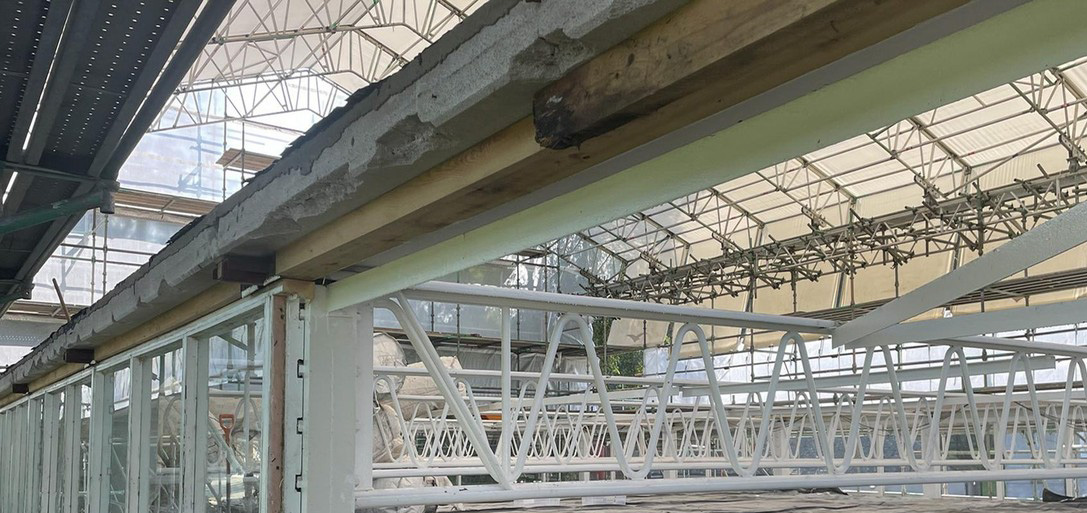
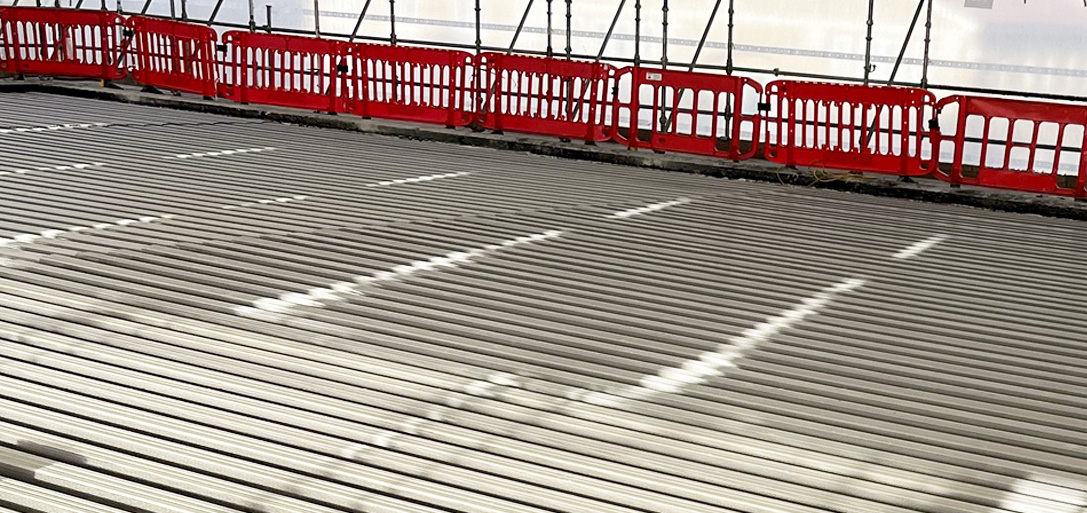
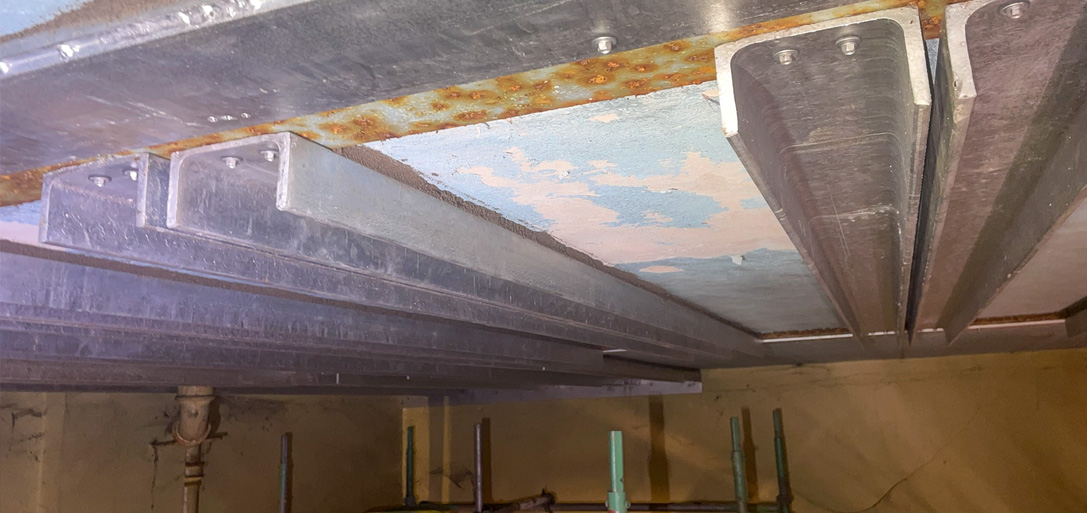
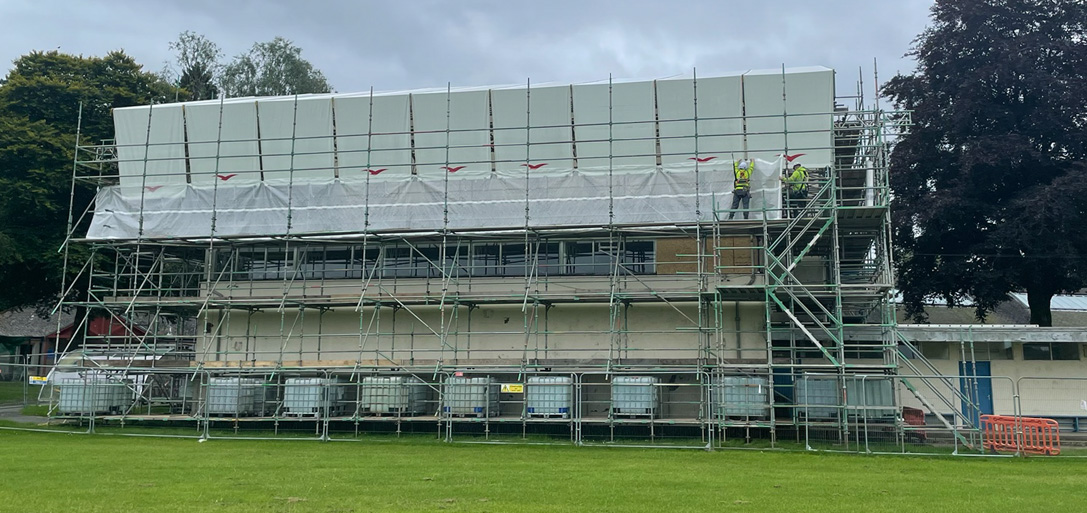
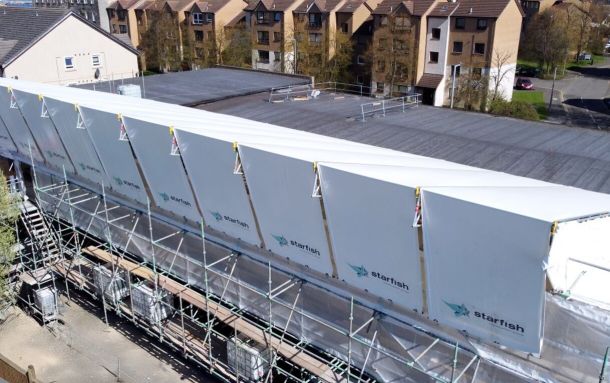
We deliver compliant structural strengthening, repair, and replacement of RAAC elements with safety and continuity. Our extensive RAAC experience means we understand and plan around the operational challenges RAAC poses in commercial, educational, and industrial buildings. Integrated building and access design, technical scaffolding, and secure system-of-work planning mitigate risk throughout our project delivery, while our comprehensive project management minimises disruption, ensures safety, and delivers high-quality outcomes.

Seamless Compliance and Risk Management
We align our approach with current guidance to support building duty holders in understanding and managing their responsibilities. Through transparent reporting and digital project information, we provide stakeholders with clarity and confidence, while our RAAC management processes ensure compliance with the Building Safety Act where applicable.
RAAC Risk Categories and Required Actions.
Duty holders must understand RAAC risk levels to prioritise remedial work. Our RAAC risk assessment services classify findings as:
-
High Risk
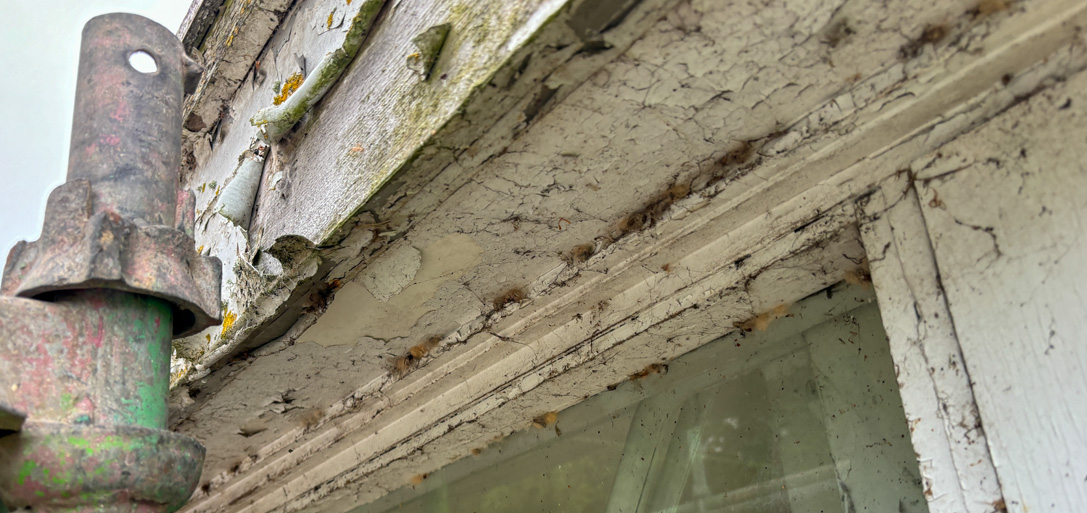
Advanced deterioration, deflection, cracking or water ingress. Immediate temporary supports or access restrictions may be required, followed by urgent RAAC strengthening works or replacement. -
Medium Risk
Panels require monitoring or planned strengthening. Works can often be programmed with minimal disruption. -
Low Risk
Panels remain structurally stable but require routine inspection, planned maintenance or long-term monitoring.
These categories are aligned with current structural engineering guidance and inform your RAAC assessment and remediation record.
CONTACT OUR SPECIALIST RAAC TEAM
If you need to speak to our RAAC Remediation Team about a project, please visit our Contact Us Page
Practical RAAC Remediation Guidance for Duty Holders
Developed by Starfish Construction, this practical guide provides building owners, surveyors and duty holders with a structured overview of the five key compliance priorities, inspection expectations and documentation requirements involved in managing RAAC safely and responsibly. Download our practical Duty Holder Guidance & Checklist to understand the key responsibilities, inspection expectations and compliance priorities when RAAC is identified or suspected and to ensure safe removal or remediation.

Lifecycle Management and Ongoing Monitoring.
RAAC management extends well beyond initial remediation, making it vital for duty holders to establish a long-term strategy. We offer scheduled re-inspection programmes that monitor the condition of RAAC elements over time, supported by customised monitoring and maintenance plans that help prevent deterioration and maintain ongoing structural safety.
As part of this service, we update your RAAC assessment and remediation record to include any changes in condition or corrective actions. All data is presented through clear digital documentation that meets Golden Thread requirements.
This structured approach ensures ongoing compliance and enables duty holders to take a proactive stance on building safety. Starfish Construction has been working UK-wide to provide expert and safe solutions for RAAC Remediation, across a range of educational and commercial properties.

Building Safety Act Compliance and Duty Holder Support
RAAC remediation is a vital responsibility for building owners and managers under the Building Safety Act. Our services provide comprehensive evidence and thoroughly documented processes that contribute to Safety Case information and safety management systems. We deliver the technical details required to build assessment certificate applications and provide transparent digital reporting that meets Golden Thread standards. Through precise documentation, effective communication, and a structured governance framework, we assist duty holders in understanding their obligations and demonstrating full compliance with relevant building safety legislation. Our transparent evidence-based reporting is required for any future building assessment certificate and supports accountable persons in fulfilling their statutory duties. You can explore our RAAC Insight Q&A, which offers further insight into Strafish Constructions expertise across the commercial roofing landscape.
Turnkey Solutions for RAAC Management
Starfish Construction draws on in-house expertise and project experience to deliver safe, compliant and efficient RAAC strengthening and remediation. Our end-to-end offering supports duty holders through survey, planning and delivery in a single integrated service, reducing the complexity of managing RAAC risk.
Our team has extensive experience in technical surveying and structural analysis, with a proven track record of delivering remediation projects across schools, commercial facilities, and public-sector property assets.
We are committed to upholding the principles of Health, Safety, Quality, and Environmental standards. Additionally, we actively engage in project communication and stakeholder involvement.
RAAC Remediation Frequently Asked Questions (FAQs)
If Reinforced Autoclaved Aerated Concrete (RAAC) has been identified or is suspected within your building, understanding the next steps is essential. Building owners, duty holders, estates teams and property professionals often have questions about structural risk, surveys, remediation options, programme timescales and ongoing compliance.
These frequently asked questions provide practical guidance to help you understand how RAAC is assessed, managed and remediated, and how a structured survey-first approach supports informed decision making, regulatory compliance and long-term building safety.
Buildings constructed between the 1950s and late 1980s, particularly schools, hospitals, public buildings, defence estates and some commercial properties, may contain Reinforced Autoclaved Aerated Concrete, known as RAAC.
RAAC can be difficult to confirm through visual inspection alone. Where construction records are incomplete, unclear or unavailable, a professional RAAC survey and targeted intrusive investigation are the most reliable ways to confirm whether RAAC is present and assess its condition. Early identification helps building owners and duty holders make informed decisions about safety, compliance, risk management and any remediation requirements.
If RAAC is suspected, the first step is to arrange a competent professional assessment rather than relying on assumption or visual inspection alone. Duty holders should avoid disturbing suspected RAAC elements until the risk is understood. A structured assessment can confirm whether RAAC is present, evaluate its condition, identify immediate safety concerns and determine whether temporary controls, monitoring, strengthening or replacement may be required.
The findings should be recorded as part of the building’s safety and asset information.
Once RAAC has been identified, the priority is to assess its condition and any associated structural risk. Depending on the findings, temporary measures such as restricted access, load reduction or structural supports may be required while a detailed assessment is completed.
A professional RAAC survey and structural engineering assessment will determine whether monitoring, strengthening, partial replacement or full removal is the most appropriate course of action. This allows building owners and duty holders to develop a safe, proportionate and evidence-led remediation strategy.
Building owners and duty holders are responsible for ensuring their buildings remain safe and are appropriately managed. This may include landlords, accountable persons, facilities managers, estates teams or organisations responsible for building safety and maintenance.
Where RAAC is identified or suspected, responsibilities may include commissioning competent surveys, assessing structural risk, implementing appropriate control measures, appointing competent professionals and maintaining suitable records.
Depending on the building type and the nature of the works, responsibilities may also be influenced by the Building Safety Act 2022, Building Regulations, CDM Regulations and wider duty holder competence requirements.
Every RAAC remediation project should begin with a clear understanding of the building. Visual inspections may identify potential concerns, but they cannot confirm the structural condition of RAAC or determine the most appropriate remediation strategy.
A professional RAAC survey, supported by intrusive investigation where required, provides the technical information needed to assess risk, develop an engineering solution, establish realistic programme and cost expectations, and support informed decision making throughout the project.
This survey-first approach helps avoid unnecessary work, reduce uncertainty and ensure that any remediation strategy is based on evidence rather than assumption.
A RAAC survey typically includes a review of available building information, inspection of relevant roof, floor or wall areas, targeted intrusive investigations where required and assessment of the structural condition of any suspected RAAC panels.
The assessment may consider cracking, deflection, water ingress, bearing conditions, loading, fixings, deterioration and the building's wider operational use.
The output should be a clear report confirming whether RAAC is present, where it is located, its condition, the level of risk, recommended next steps and whether further structural engineering review, temporary works, remediation or ongoing monitoring is required.
A professional RAAC survey typically provides confirmation of whether RAAC is present, its location and condition, supporting photographs, structural observations, risk assessment and recommendations for monitoring, strengthening or remediation.
The findings provide building owners and duty holders with the technical information required to plan appropriate next steps, support budget and programme planning, and demonstrate effective asset management.
Where required, the survey information can also support compliance records, building safety information, remediation planning and future Golden Thread documentation.
The appropriate RAAC remediation strategy depends on the condition of the material, the building’s use, structural requirements, operational constraints and long-term objectives.
Options may include continued monitoring, load reduction, temporary support, structural strengthening, over-roofing, partial replacement or complete removal and replacement.
Selecting the right solution should always be based on detailed survey findings and structural engineering assessment. RAAC remediation should not be approached as a single standard solution, because each building, structure and risk profile is different.
No. Not every RAAC panel requires replacement. In some situations, continued monitoring, load reduction or structural strengthening may provide an appropriate solution.
The correct approach depends on the condition of the material, its structural performance, evidence of deterioration, exposure to moisture, bearing condition, loading, the building’s operational requirements and the findings of a detailed engineering assessment.
Every building should therefore be assessed individually before remediation decisions are made.
The timescale depends on the level of risk identified during the assessment. High-risk RAAC may require immediate controls, such as access restrictions, temporary supports, load reduction or urgent remedial works.
Medium-risk findings may require planned strengthening, replacement or a defined monitoring regime. Lower-risk panels may remain in place where a competent assessment confirms this is appropriate, provided routine inspection and maintenance are maintained.
The key point is that RAAC should not be ignored once identified. A clear action plan and record of decisions should be maintained.
There is no standard programme for RAAC remediation because every building presents different technical and operational challenges.
Timescales depend on factors such as the size and complexity of the building, survey findings, structural design requirements, temporary works, access strategy, procurement, stakeholder requirements and whether the building remains occupied during construction.
Completing detailed surveys and investigations early helps establish realistic programmes, reduce uncertainty and improve control during delivery.
Yes. Many RAAC remediation projects can be delivered while buildings remain operational, particularly where careful planning, phased construction, temporary protection and effective stakeholder communication are in place.
Working within occupied schools, commercial premises, public-sector buildings and live operational environments requires detailed programming, safe segregation, clear access routes, temporary works planning and close coordination with building users.
Starfish Construction plans RAAC works around safety, continuity and operational requirements to minimise disruption wherever possible. Visit our London School RAAC Remediation project case study to gain a better understanding of the process in an occupied building environment.
The level of disruption depends on the building, the condition of the RAAC, access requirements and the chosen remediation strategy.
Some projects can be completed in carefully phased sections with limited impact on day-to-day operations, while others may require temporary closures, access restrictions or decanting of specific areas.
Early surveys, practical sequencing, temporary protection, stakeholder communication and clear project planning all play an important role in reducing disruption and helping building users understand what will happen, when it will happen and why.
Yes. Although the primary objective is to address structural safety, RAAC remediation can also create opportunities to improve the building's overall performance.
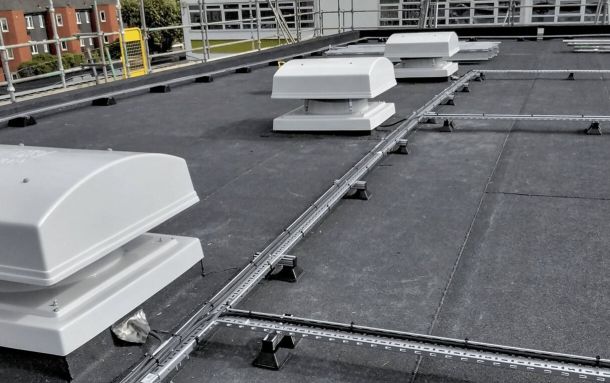
Roof replacement, upgraded insulation, improved weatherproofing, modern construction materials and better building envelope detailing can help improve thermal performance, reduce future maintenance requirements and extend the building’s operational lifespan.
Where appropriate, RAAC remediation can therefore form part of a wider building performance, safety and asset improvement strategy.
Duty holders should retain clear records showing how RAAC has been identified, assessed, managed and remediated. This may include survey reports, intrusive inspection findings, structural assessments, risk classifications, temporary works information, remediation strategies, design calculations, method statements, compliance records, as-built information, O&M manual updates and ongoing inspection schedules.
Where the Building Safety Act applies, these records may also support wider duty holder responsibilities, including evidence of competent appointments, risk management, prescribed documents, safety case information, Gateway requirements and Golden Thread records.
Starfish Construction has developed a practical RAAC Management Duty Holder Guidance and Checklist to help building owners, surveyors, property managers and duty holders understand the key responsibilities involved when RAAC is identified or suspected. The guide covers five key compliance priorities, including confirming material and structural condition, establishing risk and immediate controls, defining a remediation or removal strategy, ensuring Building Safety Act compliance and maintaining the Golden Thread of information.
Contact Us for RAAC Advice and Support
If you believe your building may contain RAAC or you need specialist remediation support, get in touch with Starfish Construction to speak with our building safety team. Complete the Enquiry form.