
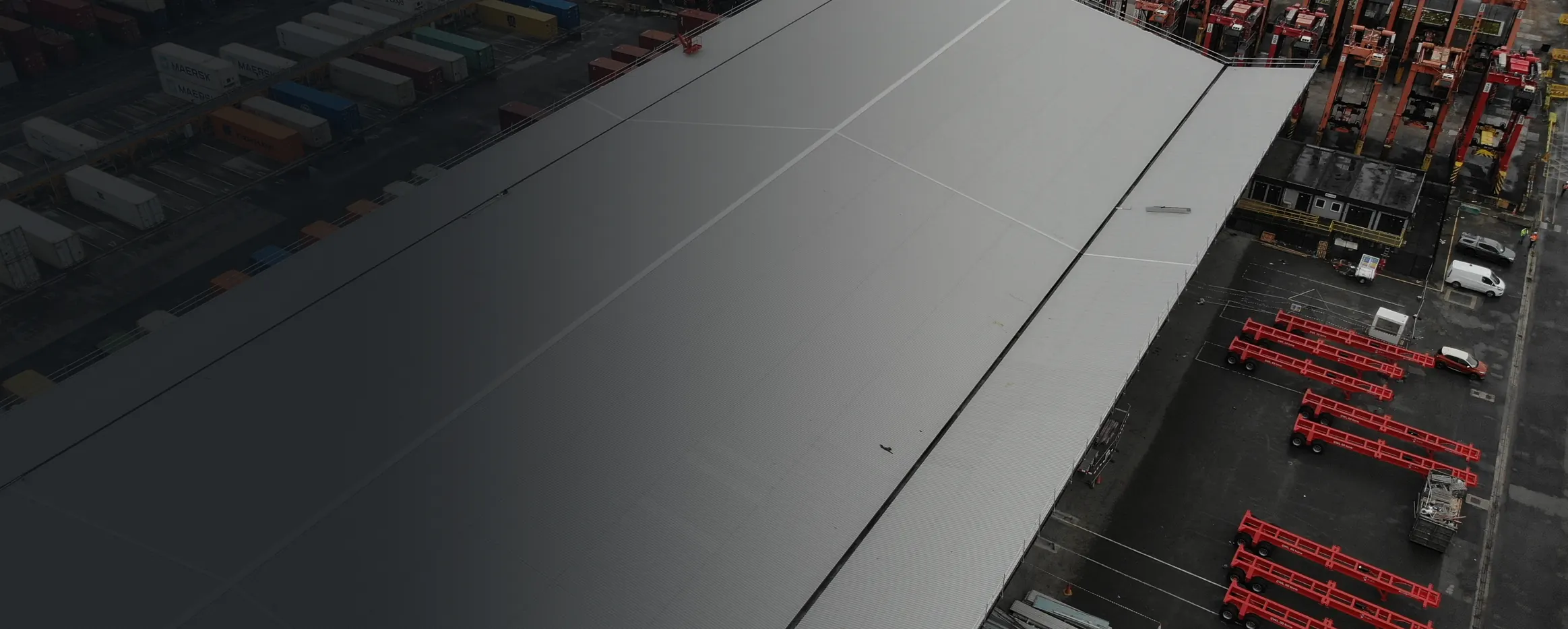
UK Container Terminal Shed:
Coastal Roof Overclad

20 Weeks

10,000 m²
INVESTING IN AN ASSET
THE TERMINAL DEPENDS ON
The client is investing in the properties, facilities and infrastructure across its sites to keep the UK an attractive place for business investment. A shed at the heart of a busy container terminal cannot afford a roof that leaks, or one that needs constant patching.
Repeated short-term repairs had stopped making sense. The roof needed a long-term answer.
Starfish Construction won the tender on a combination of cost, health and safety standards on live sites and a record of working to tight deadlines. The brief went beyond a quick fix: the client wanted to understand its options for a commercial roof that would last.

Taking Time to Understand the Building
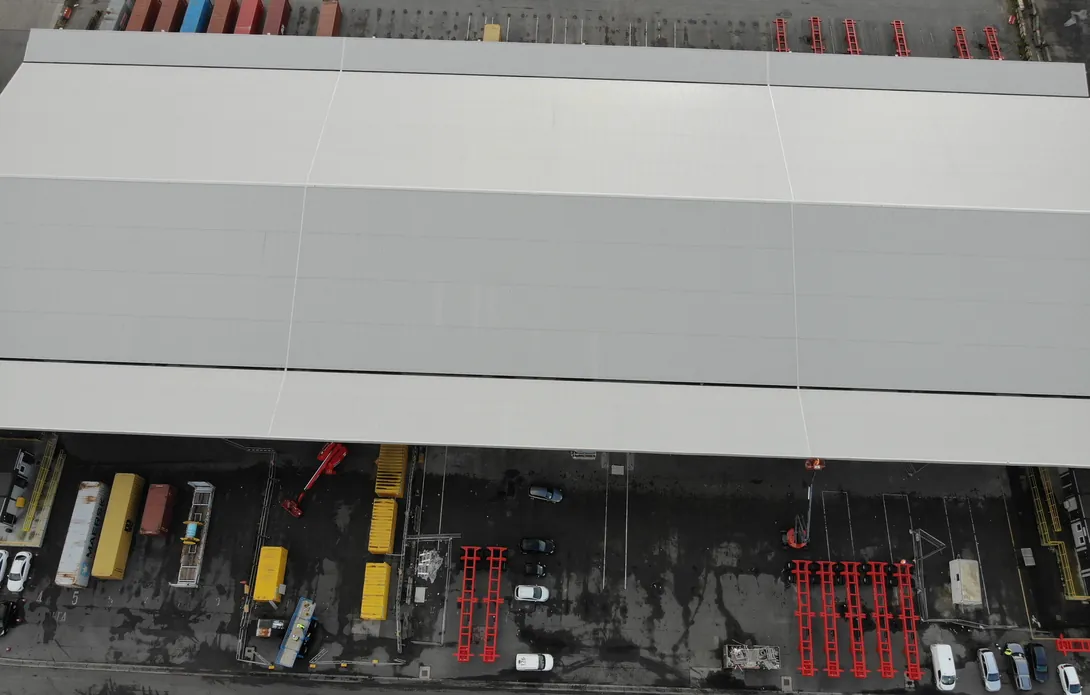
Because the existing roof was fragile, our technical surveying team carried out a drone survey rather than putting people on the sheets. It confirmed the roof was in a poor state of repair across its whole area.

A costed, clearly presented proposal let the client make an informed decision, rather than committing to another short-term repair that would not have been cost-effective.
We recommended a full overclad as the best course of action and presented alternative life-cycle options alongside it. The coastal location shaped every part of the specification: future maintenance, increased gutter capacity, better thermal efficiency and A4-grade stainless steel fixings to resist corrosion.
Our Expertise
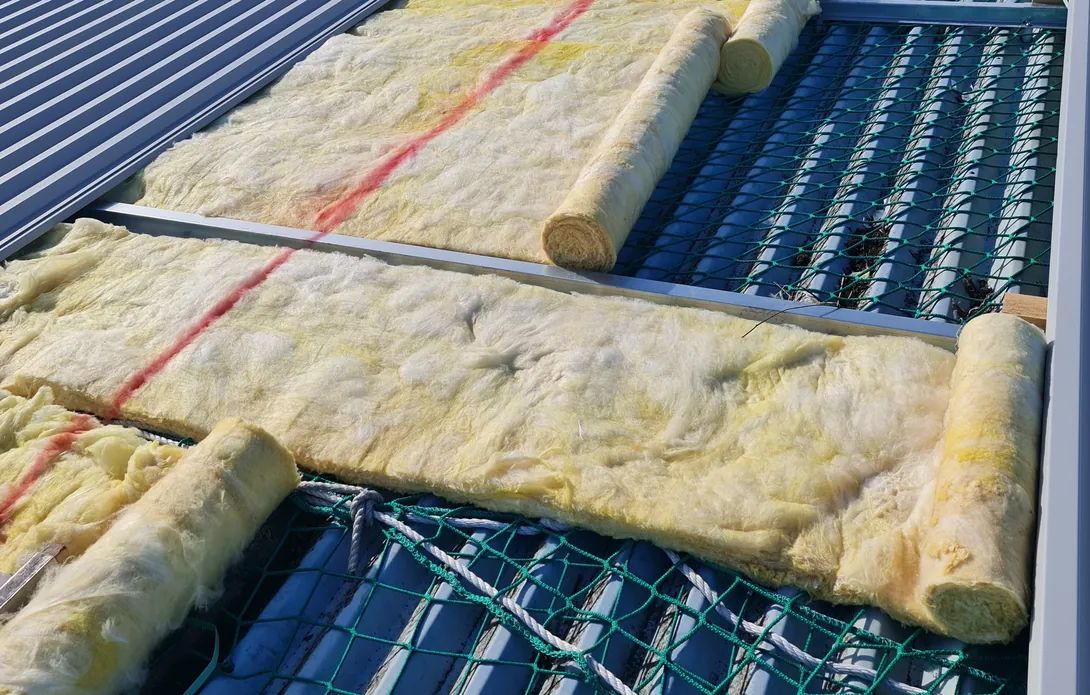
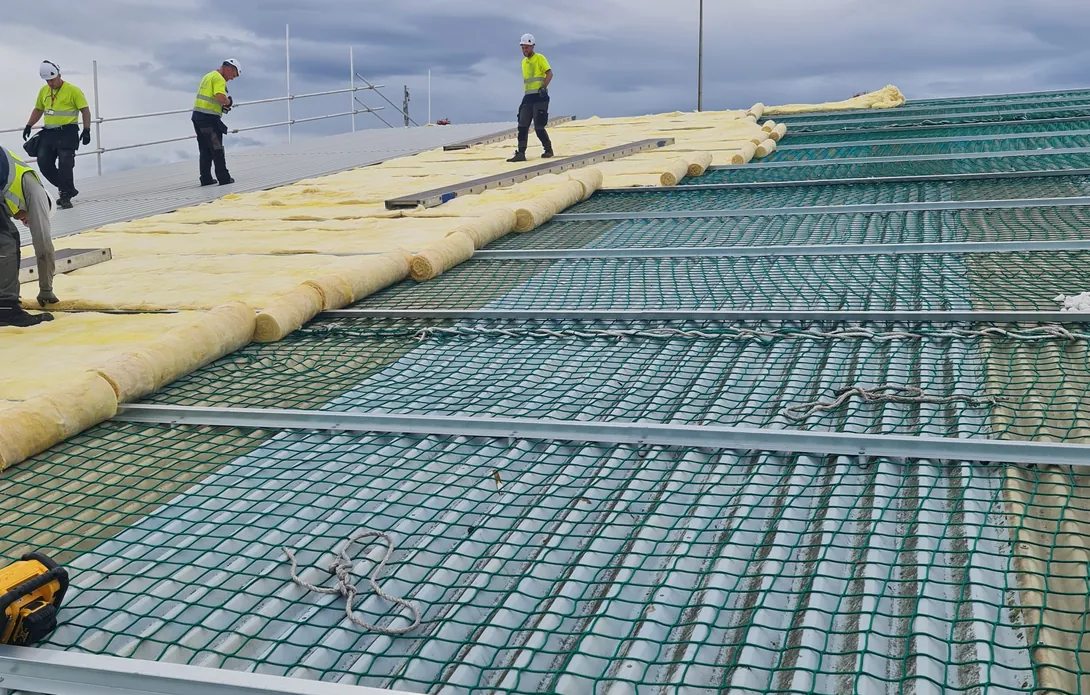
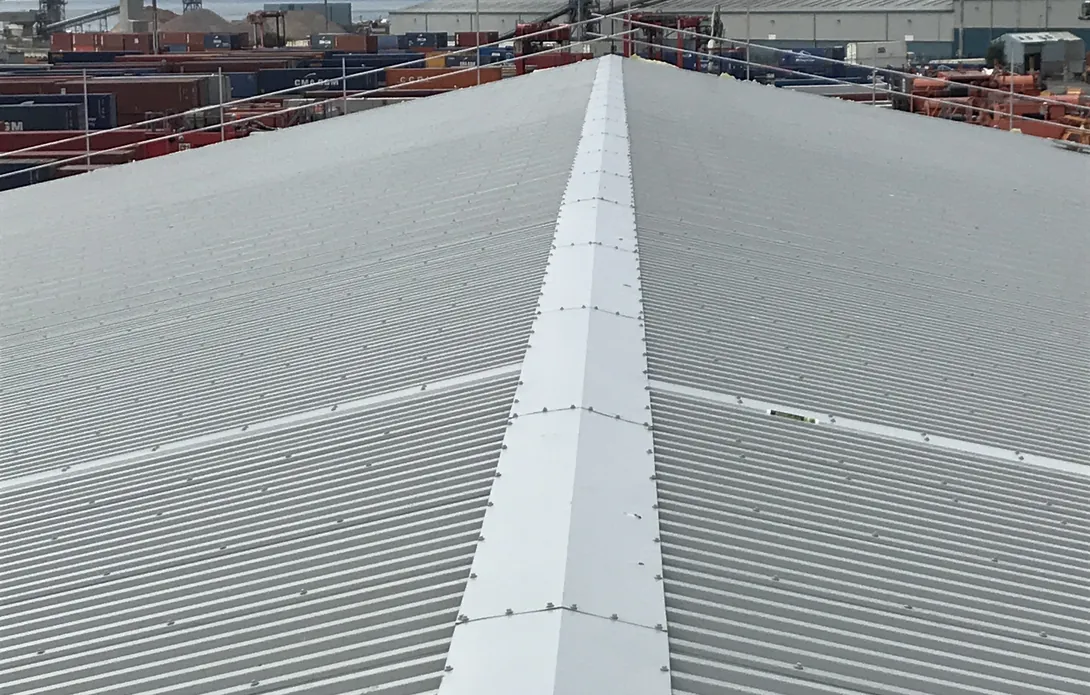
We overlaid 7,500 m² of new roofing system on the main roof and stripped and replaced 2,500 m² of canopy roof sheets. Zed bar spacers fixed into the existing purlins carried the new system clear of the old sheets, with 80 mm insulation, compressed to 50 mm, installed between the two layers.
The overlay turned a fragile roof into a non-fragile one, making it safer to maintain for years to come.
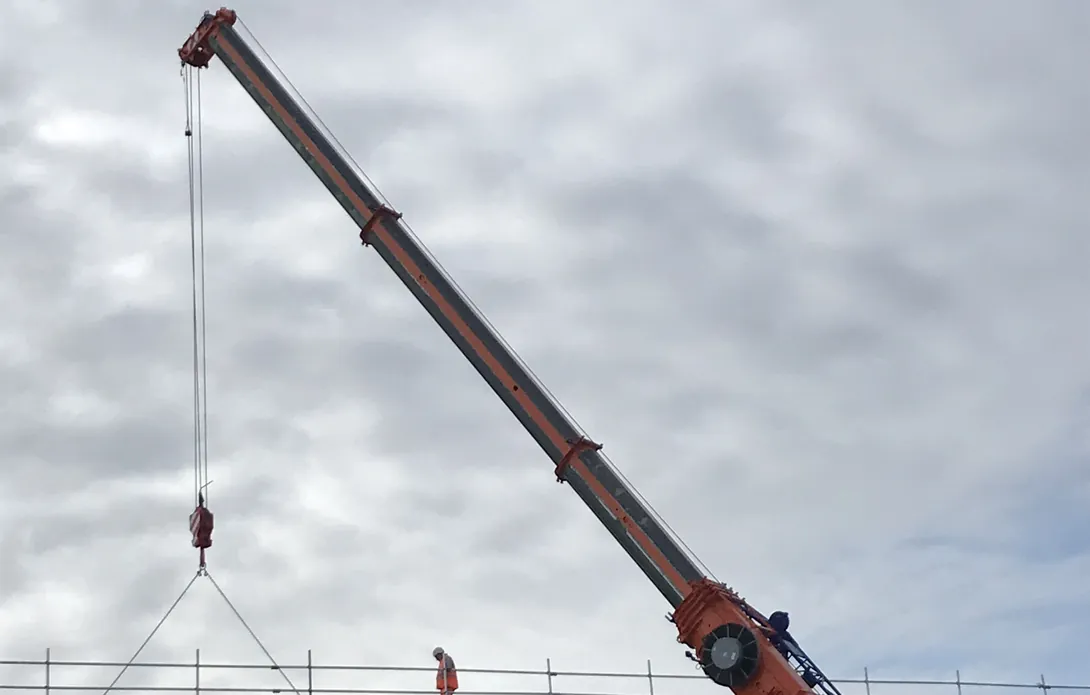
In total, 10,000 m² of marine-environment roof sheets went onto the main roof and canopies, fixed with stainless steel fixings to prevent corrosion from the coastal environment. Replacement steelwork was lifted into position where it was needed.
Working Within a Live Container Terminal
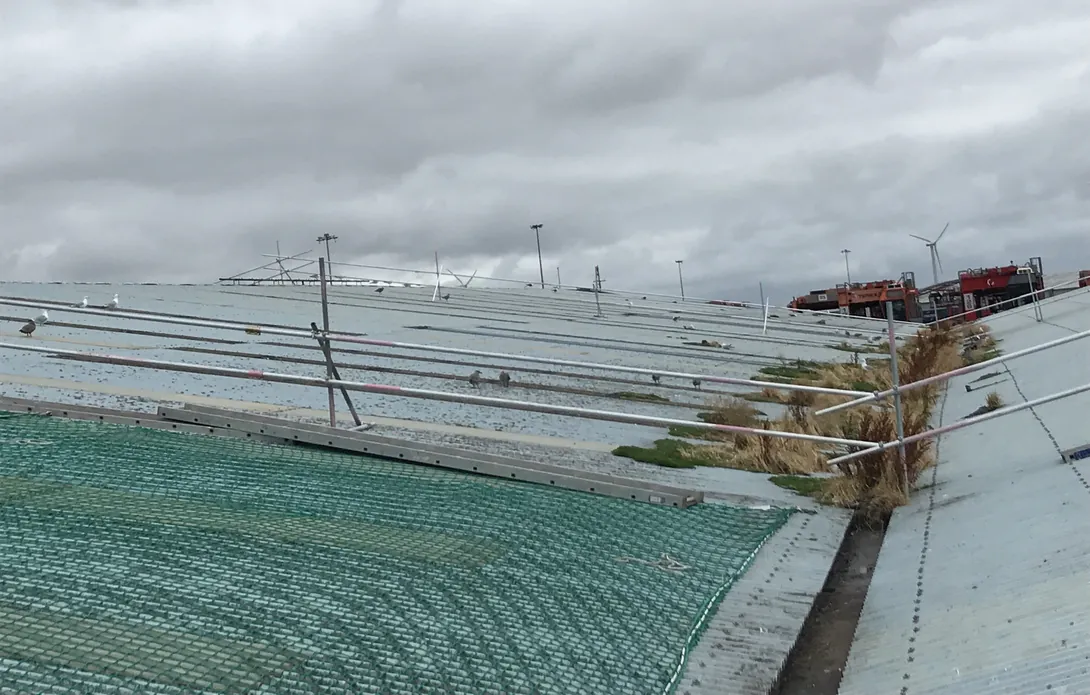
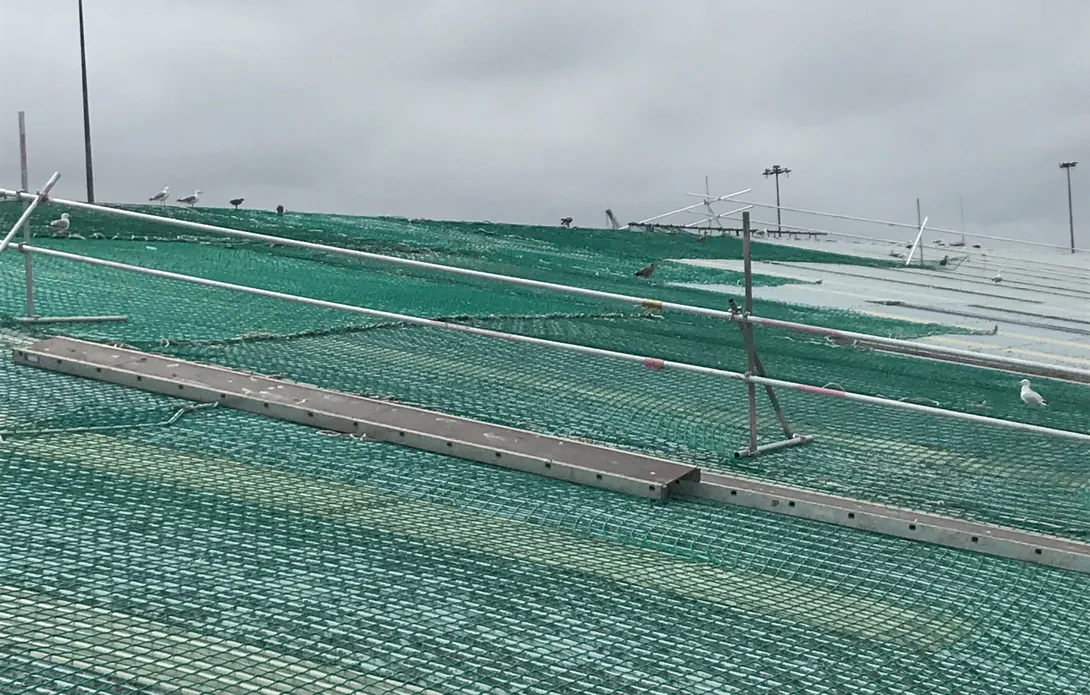
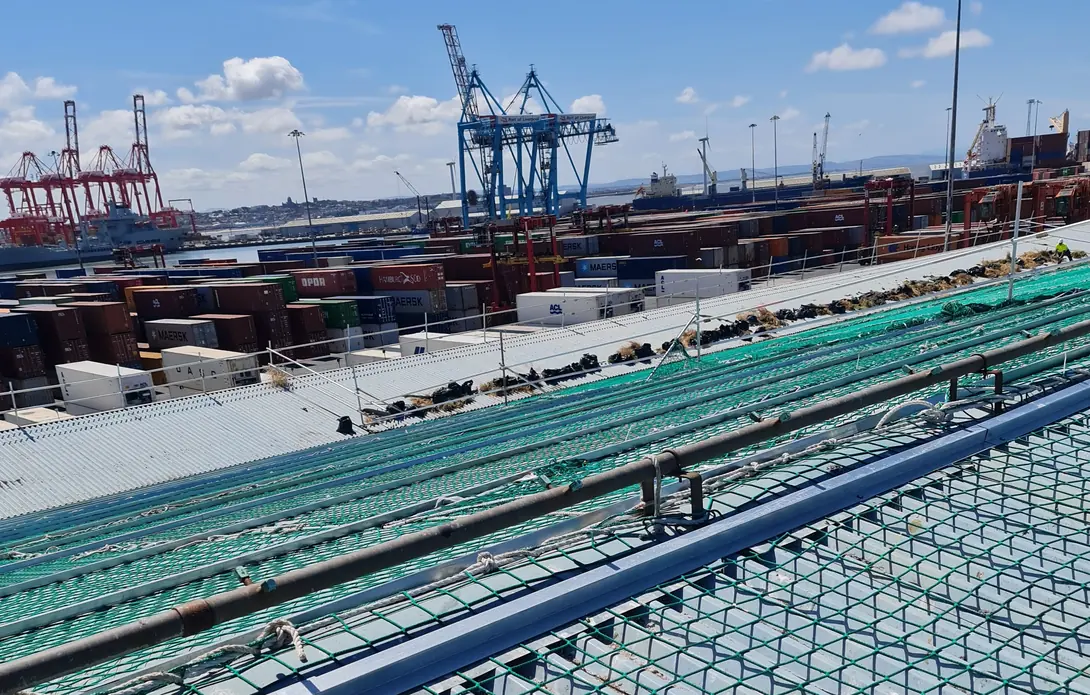
The shed and the terminal around it stayed fully operational throughout, so our methodology had to protect both the workforce and the client's operations. Sacrificial netting covered the main roof area, with underslung netting beneath the canopies, and roof edge protection and Youngman boards gave the team a safe working platform on the fragile sheets.
The works were completed with the building and surrounding environment fully operational and no disruption to the terminal.
Materials were craned onto the roof in line with a roof loading plan, and daily liaison with key on-site personnel kept our programme aligned with the terminal's. Our health and safety approach was tested independently: the project achieved 100% satisfaction across three client safety audits.


PROJECT SUMMARY
